Gaming Chair vs Office Chair: Which One Saves Your Back?
 Visit on Amazon →
 Visit on Amazon →
The marketing says gaming chairs are built for marathon sessions. The ergonomics community says they're a trap. I've spent the last eight years and roughly 15,000 seated hours figuring out who's right, and the honest answer is: it depends on which gaming chair, which office chair, and what your spine actually needs.
Visit on Amazon →
The marketing says gaming chairs are built for marathon sessions. The ergonomics community says they're a trap. I've spent the last eight years and roughly 15,000 seated hours figuring out who's right, and the honest answer is: it depends on which gaming chair, which office chair, and what your spine actually needs.
I own a Secretlab Titan that I've used daily for two years, I've killed three cheaper gaming chairs before it, and I've tested a Herman Miller Aeron for 60 days at a friend's insistence.
Here's what I've learned.
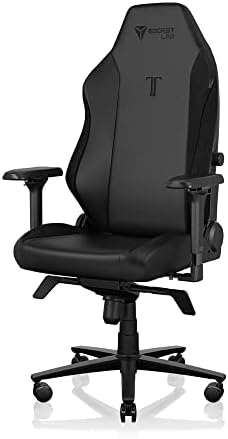
Secretlab Titan Evo XL Black Gaming Chair - Leatherette, Ergonomic
Cold-cure foam still holds after 2 years, rock-solid armrests
Visit on Amazon →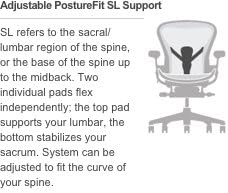
Herman Miller Aeron Ergonomic Chair - Size B, Graphite
When Bill Stumpf and Don Chadwick designed the Herman Miller Aeron Chair, they combined a deep knowledge of human-centered design with never-before-seen technology to create a task chair unlike any ot
Visit on Amazon →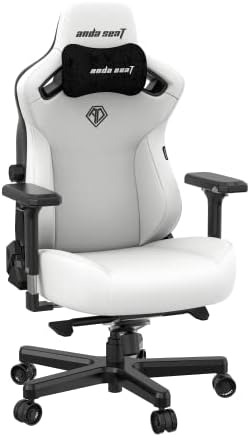
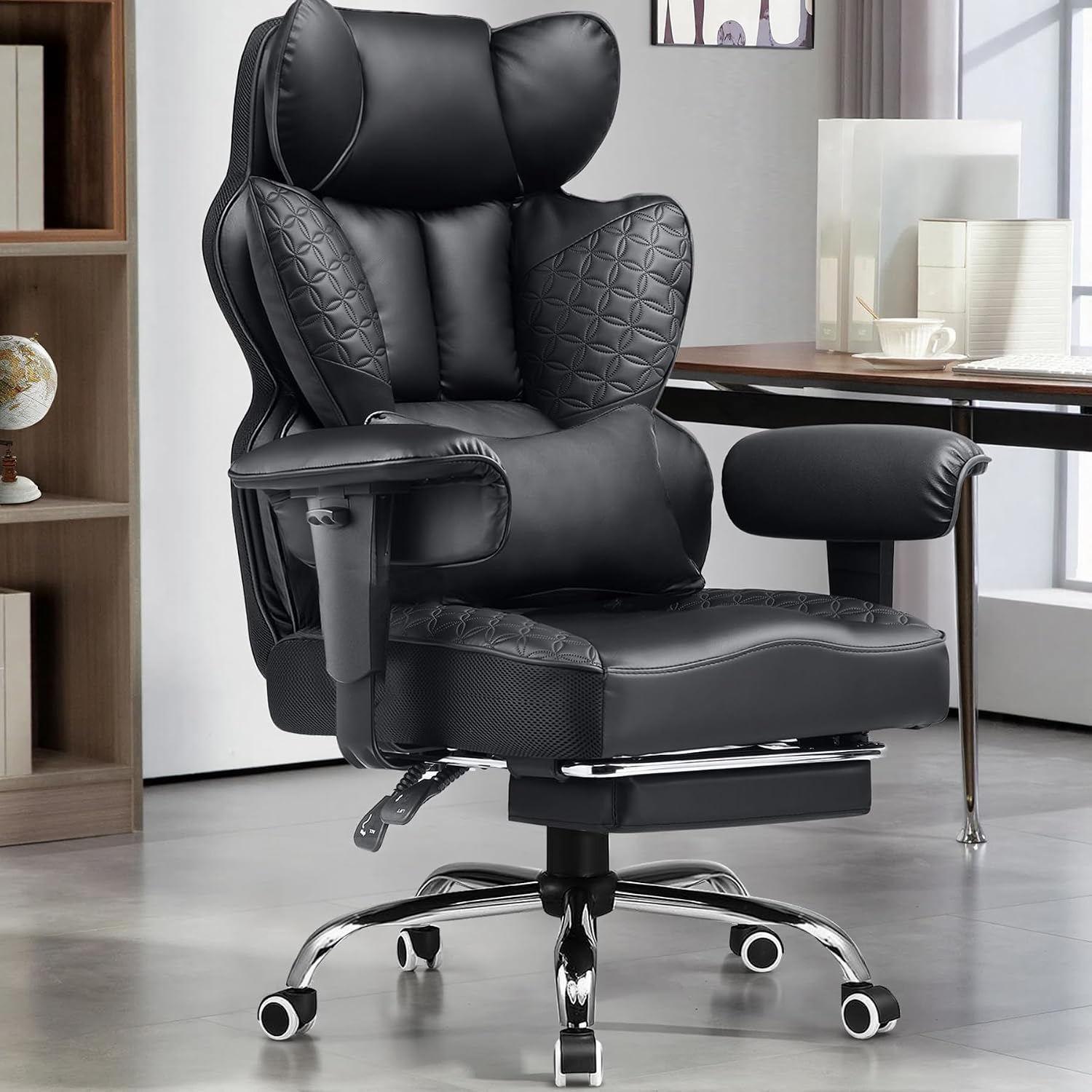
Anda Seat Kaiser 3 Large Gaming Chair for Adults - Ergonomic Black PVC Leather Gaming Seat with Lumbar Support, Comfortable Office Chair with Neck Support - Heavy Duty Wide Computer Seat
Ergonomic PVC-leather gaming chair rated to 260 lbs with a steel frame.
Visit on Amazon →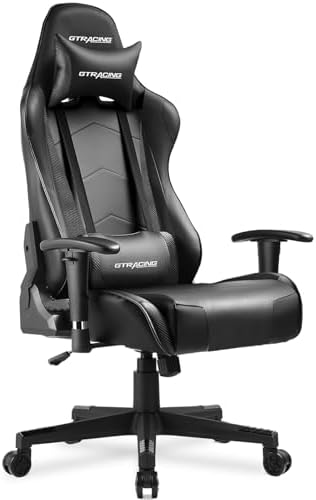
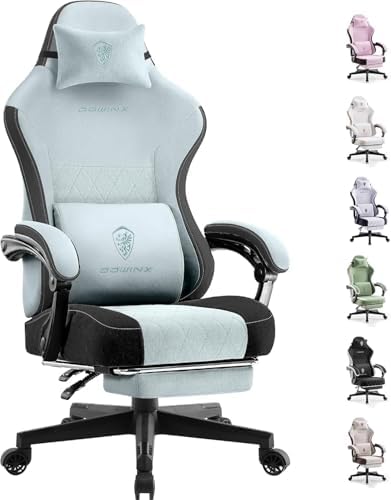
GTRACING Gaming Chair Racing Office Computer Ergonomic Video Game Chair Backrest and Seat Height Adjustable Swivel Recliner with Headrest and Lumbar Pillow Esports Chair,Black
When Bill Stumpf and Don Chadwick designed the Herman Miller Aeron Chair, they combined a deep knowledge of human-centered design with never-before-seen technology to create a task chair unlike any ot
Visit on Amazon →The short version
If you sit more than four hours a day, the budget gaming chair tier is a rental, not a purchase. I bought the ~$189 GT Racing first because it looked like what the pros used on stream. It dropped me on the floor mid-match during a ranked session when the gas lift failed.
My teammates still bring it up. The foam had flattened by month eight, and by month eleven I could feel the seat pan through the cushion.
That's bottoming out, and it's the death of every chair under ~$250.
The real question isn't gaming vs office. It's whether the chair has adjustable lumbar, a tilt lock that holds, and armrests that don't wobble. Everything else is marketing.
The Secretlab Titan Evo
The flaw first: the base model's lumbar support isn't enough if you need aggressive lower back pressure. I've seen that complaint enough times to believe it. I'm 6'1" and 220 pounds, and the built-in lumbar dial on my Titan Evo needed to be cranked to maximum before my back stopped complaining after hour five.
But I've had this chair for two years, and the cold-cure foam still holds its shape. I sat in it for 400 hours of Elden Ring, plus coaching sessions that run four to six hours, plus eight-hour workdays. The magnetic head pillow actually stays where I put it. That sounds like a small thing until you've fought a slipping pillow for a year on a cheaper chair.
The armrests are the real story. They adjust in four dimensions, and they don't move once you set them. My 65-pound Labrador Mochi has claimed this chair whenever I'm not in it, and she's destroyed two armrests on previous chairs. The Secretlab ones still look new.
~$549 divided by 2,000 hours of use is 27 cents an hour. The GT Racing cost me 60 cents an hour and a herniated disc scare at 24. Buy once, cry once.
The Herman Miller Aeron
I don't own an Aeron. I tested one for 60 days when a friend who works in tech let me borrow his spare. I'm going to be honest about that limit up front, because I don't pretend to have years of data on a chair I didn't buy.
The Aeron is the chair that IT departments buy for executives, and the people who make the leap from gaming chairs rarely go back. The mesh back breathes in a way that faux leather never will. My back didn't hurt after six hours, which is something I can't say for any gaming chair I've owned except the Secretlab.
The 12-year warranty is legit, and the resale value is absurd. Used Aerons from the early 2000s still sell for ~$400.
Here's the problem: it's ~$1,395, and it doesn't have a headrest. If you lean back to watch a cutscene or rest between matches, you're holding your neck up. There are aftermarket headrests, but they bolt onto a chair that wasn't designed for them.
The other thing I noticed: the Aeron doesn't force you into good posture. It just doesn't force you into bad posture. The seat pan tilts forward so your hips stay open, and the lumbar curve is adjustable but subtle. If you need aggressive support, the Secretlab gives you more.
Choose the Aeron if you sit eight hours a day and want a chair that will outlive your next three gaming setups. Choose the Secretlab if you want the headrest and the firmer lumbar. Both beat every racing-style bucket seat I've tried.
The Anda Seat Kaiser 3
I tested this one for a month specifically because I've been looking at the big-and-tall market. The standard gaming chair is built for someone who's 5'10" and 160 pounds, and the Kaiser 3 is one of the few that actually acknowledges larger players exist.
The flaw first: it's stiff out of the box. I mean genuinely stiff, like sitting on a park bench wearing a racing costume. The break-in period is two to three weeks, and some people never get past it. The shipping cost was also brutal, which I didn't factor into the ~$449 price until checkout.
But the seat base is wider than any gaming chair I've tested, the steel frame is heavier, and the weight capacity is 330 pounds. My friend Dave, who is 6'4" and 260 pounds, has owned one for 18 months and says it's the first chair that didn't feel like it was built for a smaller person. The lumbar support is adjustable via a knob, which is the right design. The armrests are 4D and solid.
I didn't buy this one because the Secretlab fits me fine. But if you're over 6'2" and pushing 230 pounds, the standard gaming chair is not built for you. The Kaiser 3 is one of the few that gets it.
The GT Racing GT099
I owned this chair for 11 months. It's the reason I started this site. The ~$189 price tag felt like a steal when the alternative was a ~$500 Secretlab. Here's what actually happened.
The foam flattened by month eight. The armrests wobbled by month four, and by month six the left one would rotate if I leaned on it mid-match. The gas lift started sinking around month nine, so I'd adjust the height in the morning and find myself staring at my monitor from chin height by the afternoon.
The faux leather started peeling on the seat edge at month ten, leaving black flakes on my floor.
The reviews on Amazon are full of people saying "I should have just saved up for the Secretlab." I'm here to save you from saying it. If you're sitting more than four hours a day, this chair costs more in replacement and back pain than it saves at checkout.
The Razer Iskur, and why a fixed lumbar curve is a gamble
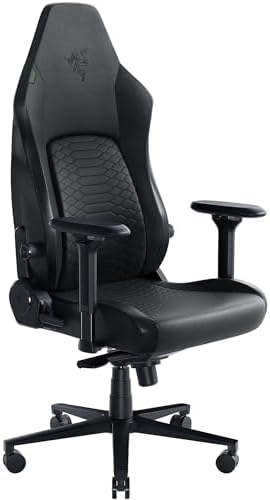
I haven't done a full 30-day test on the Iskur, so I'm not going to review it like I own it. But I've sat in one at a friend's place for a few hours, and I have opinions about the design philosophy.
The Iskur's built-in lumbar curve is polarizing. People either love it or hate that it can't be removed. My take: a fixed curve is a gamble because spines aren't one-size-fits-all. I'm 6'1" and 220 pounds, and the curve hit me in the wrong spot. My friend who is 5'9" and 155 pounds says it's the most comfortable chair he's owned.
If you can't adjust the lumbar, it's not for you unless you've sat in it. That's the rule. Adjustable lumbar, whether it's a dial or a lever, is always the safer bet.
So which one saves your back?
The honest answer is that the gaming chair vs office chair debate is mostly marketing noise. The bucket seat shape is the worst thing to happen to gamers' spines, and I say that as someone who bought three of them before I learned better.
The racing-style shape forces a hunch, and a hunch for eight hours a day will end your career. I've seen a herniated disc end a career at 24.
Sit properly or don't sit long.
What actually matters is whether the chair has adjustable lumbar, a tilt lock that holds, and armrests that don't wobble. The Secretlab Titan Evo has all three, and it's the chair I recommend to strangers in Discord.
The Herman Miller Aeron has all three and better materials, but it costs three times as much and skips the headrest.
The Anda Seat Kaiser 3 gets it right for the big-and-tall crowd, if you can handle the break-in.
I don't track prices day to day, so I won't pretend to know next week's deals. But I know this: a ~$200 chair that dies in a year costs more than a ~$500 chair that lasts five. The math is the argument. Skip the budget tier, get the adjustable lumbar, and your back will thank you for the next decade.