Related: Mesh vs Leather Gaming Chairs: What Your Back Wants in July
Shopping for gaming chairs with footrest is mostly an exercise in reading the same paragraph four times. Recline, footrest, lumbar pillow, racing stripes. The details that decide whether a chair survives an eight-hour scrim day are either buried in the bullet points or missing entirely.
I coach an esports team in Los Angeles. Before that I spent ten years playing ten-hour practice days, and I collected the full set of chair horror stories along the way: the one that collapsed under me mid-match, and the lower back scare at 24 that turned a physical therapist into the most important person on my schedule. So when I look at a chair, I am not looking at the styling. I am looking at whether the lumbar support actually adjusts, whether the tilt can lock at an angle my spine agrees with, and whether the armrests can be moved to where my elbows want to be.
The four chairs below are what is in this bracket right now. Two are LUCKRACER builds aimed at different priorities, one is a fabric option for people who run hot, and one is the budget entry that still claims a 330 lb capacity. Here is what each one is actually for.
What I check before anyone on my roster sits down
A gaming chair is a chair first and a gaming product second. If it does not support your back at hour six, it is a toy with a logo on it.
Four things get checked before I care about anything else.
Adjustable lumbar support. A fixed bump in the lower back is decoration. It either matches your spine's curve or it fights it, and you cannot tell which until your back tells you three hours in. Adjustable is the only version worth paying for.
Seat depth. Too long and the edge of the seat digs into the back of your knees, which pulls your hips forward and flattens your lower back. Too short and your thighs hang off the front with nothing under them.
Tilt tension and a tilt lock. A serious chair lets you lean back and lock it at the angle that supports you, rather than making you choose between bolt upright and fully reclined.
Armrests. Up and down only is not adjustment, it is a height setting. The difference between "fits" and "fits you" is armrests that also move in, out, and at an angle.
One more thing about the footrest, since every chair here has one. A footrest is for reclined viewing, controller sessions, and between-match downtime. It is not a typing position. If you are pulling the leg rest out during a ranked grind, you are probably not sitting in a way your lower back will thank you for later.
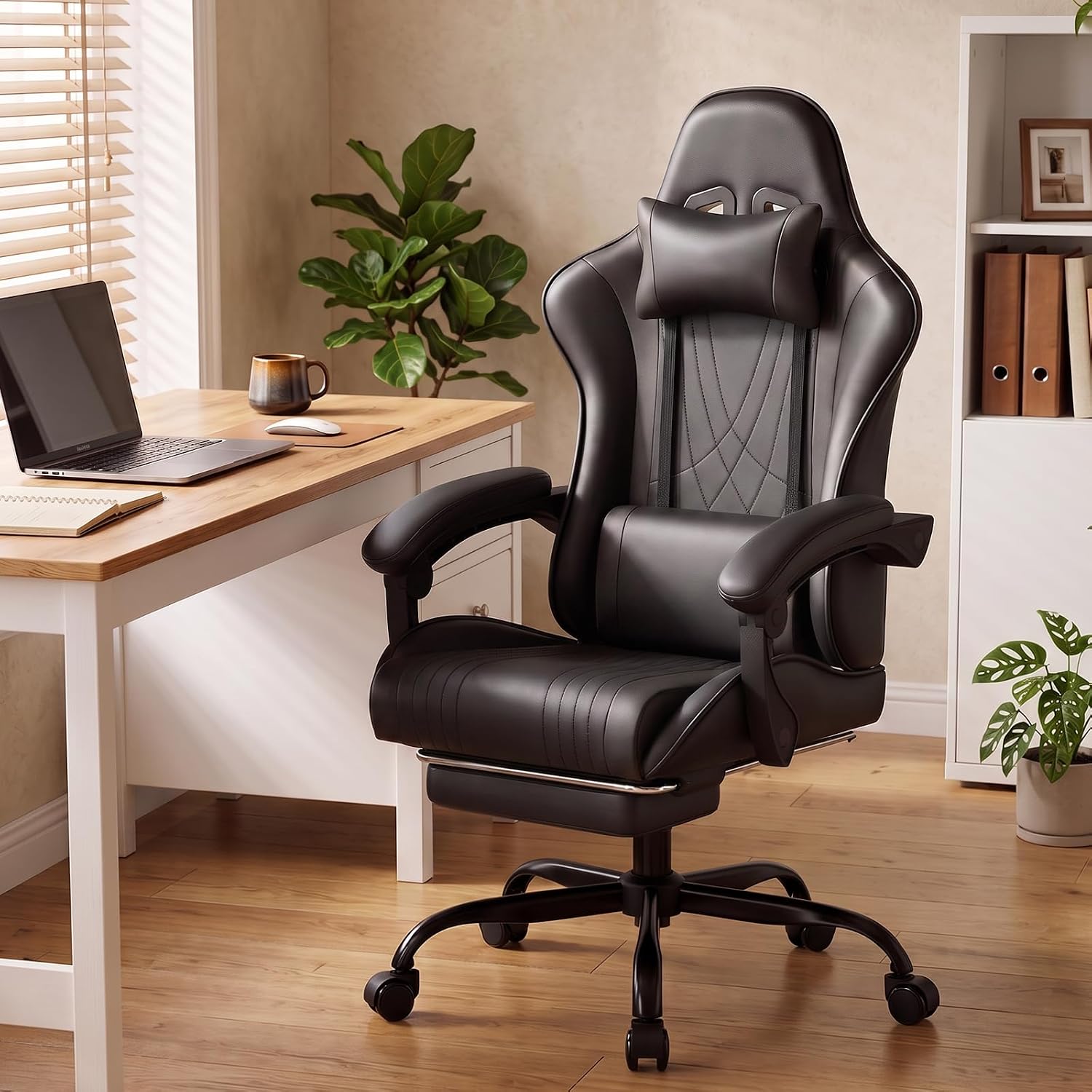
Best Overall: LUCKRACER Pocket Spring Seat Gaming Chair
This is the one I would point a serious player toward first. The pocket spring seat is the reason. Most chairs in this price bracket put you on a slab of foam that compresses into a flat spot within a season, and once it flattens, your hips start sliding forward and your lumbar curve goes with them. Pocket springs spread load the way a mattress does, so the seat keeps its shape and keeps you where the backrest can do its job.
The rest of the spec sheet covers the checklist. There is lumbar support, a 90 to 135 degree recline range, height adjustment, and an SGS-tested gas lift, which matters more than people think. A cheap gas lift is how you end up with a chair that sinks an inch an hour and wobbles by month six. The 330 lb capacity is the highest of the group alongside the budget pick.
The compromise is the linkage armrests. They are tied to the backrest, so when you recline, they follow. That keeps your forearms supported through the recline, which is genuinely useful, but it means you do not get independent up, down, in, out, and angled positioning. If 4D armrests are non-negotiable for you, this is the wrong chair. If you mostly want your arms supported while you lean back and watch a replay, it is a smart trade.
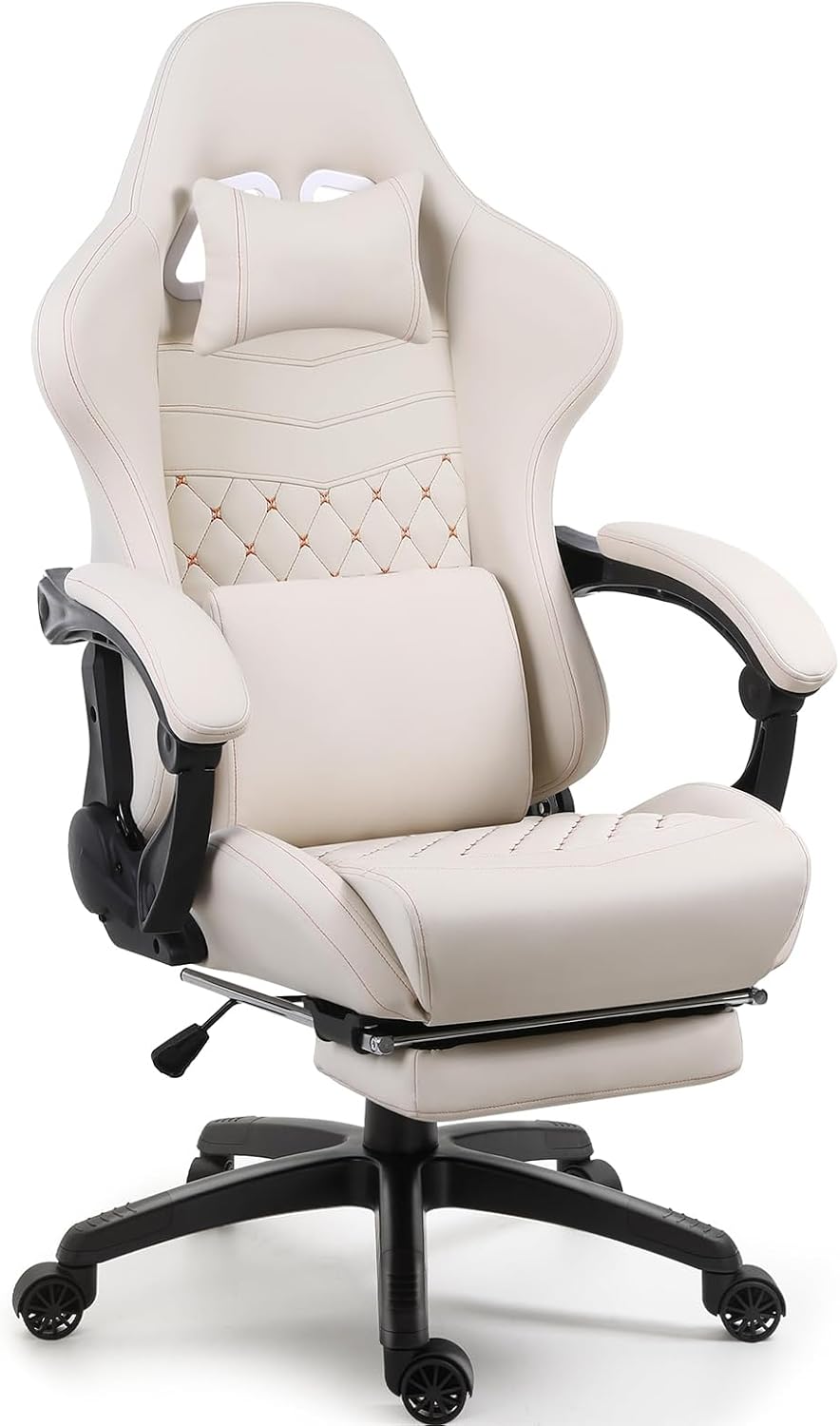
Most Features: LUCKRACER Gaming Chair with Massage and Footrest
This is the most feature-loaded chair of the four, and it is the one people ask about first because of the massage function. Here is my honest read on that: massage is a nice-to-have, not a substitute for adjustable lumbar. A vibrating motor in the backrest can loosen you up between matches. It cannot hold your lower back in a healthy curve for six hours. Buy this one for the high back and the ergonomic shaping, and treat the massage as a bonus.
The high back is the real value if you are tall. Extra height above the shoulder blades means the top of the chair supports your upper back instead of ending somewhere around your neck, which is where a lot of shorter gaming chairs fail for long-torso players.
The catch is the PU leather. It looks sharp and it wipes clean, but leather and PU leather both trap heat. In a Los Angeles summer, in a room with a PC putting out heat, three hours in a leather chair is a different experience than three hours in mesh or fabric. If you play more than two hours a session and you run warm, read the fabric pick below before you commit.
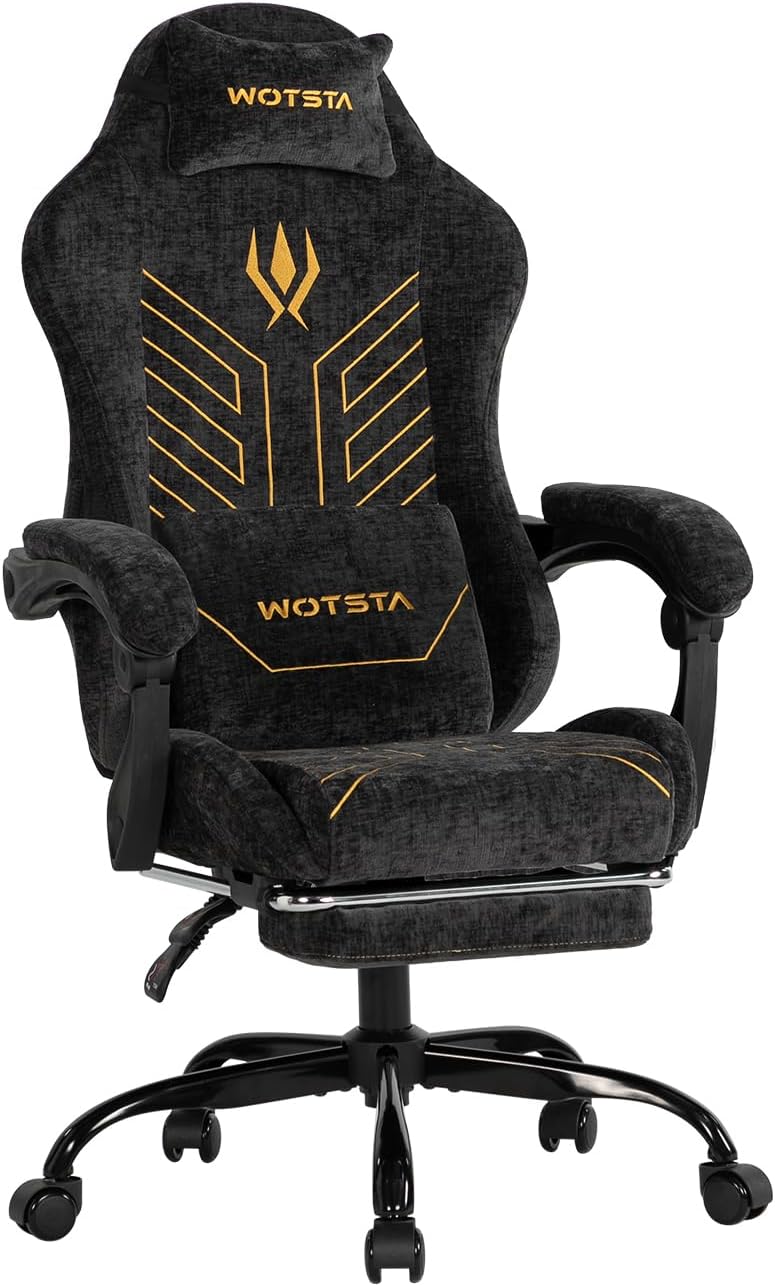
Best Fabric Pick: Fabric Gaming Chair with Footrest
If you want one sentence of advice from someone who has coached through a lot of hot afternoons: fabric beats leather for anyone who plays more than two hours. Fabric breathes. Your back will thank you in July, and so will the person doing the laundry, because fabric does not turn into a slip-and-slide the moment you start sweating.
This chair is the fabric option here, built for office and home use with a footrest and a 300 lb capacity. That capacity is the lowest of the four, and it is the number to check honestly against your own. If you are near that line, size up to one of the 330 lb chairs rather than hoping the spec has slack in it. Weight ratings exist for a reason, and the failure mode when you exceed them is a gas lift that gives out, not a warning label.
The other thing to know about fabric is that it wears differently than PU leather. It does not crack and peel. It fades and it can pill, and it holds dust, so it wants a vacuum attachment more often than a wipe-down chair does. That is the trade for breathability, and for most people who game in a warm room, it is the right trade.
Best Budget Entry: Height Adjustable Gaming Chair with Footrest
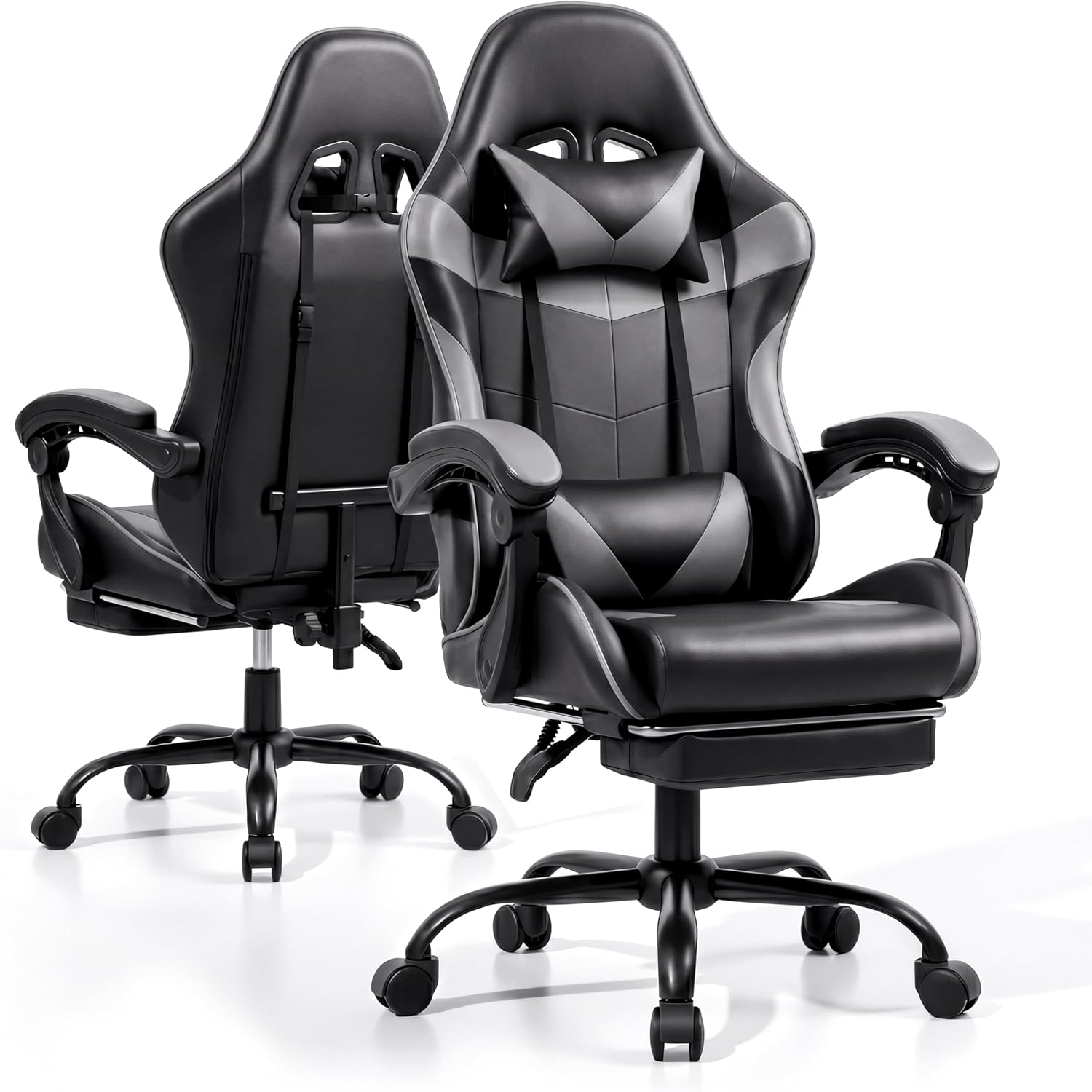
This is the entry point of the group, and the spec list is straightforward: lumbar support, a footrest, height adjustment, a 360 degree swivel base, and a heavy duty 330 lb capacity. For a first chair, a spare setup, or a desk where the chair does double duty between work and play, that covers the essentials.
What the listing does not promise is adjustable lumbar support or multi-directional armrests, and those are exactly the two things I would ask about before buying. A fixed lumbar bump is the single most common failure point in budget chairs. It feels supportive in the store and turns into a bruise after hour three if it does not sit where your spine curves. Same story with armrests: if they only go up and down, you are choosing between your shoulders and your wrists.
My advice for this bracket is simple. Buy it if the budget is the budget, but plan on adding a separate adjustable lumbar cushion, and be honest that this is a chair for sessions under three hours. Above that, the pocket spring LUCKRACER is the upgrade that actually changes how your back feels at the end of the night.
How the four compare
| Chair | Best for | Support and adjustment | Watch out for |
|---|---|---|---|
 Visit on Amazon → LUCKRACER pocket spring seat |
Full scrim days and reclined viewing | Lumbar support, 90 to 135 degree recline, SGS-tested gas lift, 330 lb capacity | Linkage armrests follow the backrest, so no independent 4D adjustment |
 Visit on Amazon → LUCKRACER massage and footrest |
Tall players and recovery between matches | High back, massage function, footrest, PU leather | PU leather runs warm, and massage does not replace adjustable lumbar |
 Visit on Amazon → Fabric chair with footrest |
Hot rooms and long sessions in fabric | Fabric cover, footrest, 300 lb capacity | Lowest weight rating of the four, so check your number first |
 Visit on Amazon → Height adjustable chair with footrest |
First chair, spare setup, mixed desk use | Height adjustment, 360 degree swivel, lumbar support, footrest, 330 lb capacity | No adjustable lumbar or armrest adjustment promised in the listing |
How I judge a gaming chair
The test I run is not complicated, and you can run it yourself in a store or on day one of ownership.
Sit in it the way you actually sit. Not the way you sit for a photo. Slouch a little. See where the lumbar support lands. If it is pressing into your mid back or floating in the gap above your hips, that is the wrong chair for your torso, no matter what the reviews say.
Lean back and lock the tilt. A chair that only offers upright or fully reclined is a chair that will teach you to sit badly. You want a position in the middle that takes weight off your lower back while keeping your forearms on the armrests.
Check the armrests against your desk. Your shoulders should be relaxed and your elbows near 90 degrees. If you have to hunch or reach to get your hands on the keyboard, the armrests are wrong and no amount of lumbar support fixes shoulder pain.
And ask what happens at hour six. That is the question that separates chairs. Anything can feel fine for 40 minutes. The chairs that hold up are the ones with support that adjusts, a gas lift that was actually tested, and a seat that has not flattened under you by the end of the season.
The fit check most people skip
Weight capacity and seat depth. That is the whole list, and almost nobody checks either one before buying.
Your weight rating needs headroom, not a perfect match. If you are 280 lb, a 300 lb chair is not a comfortable margin. Go to the 330 lb option. The failure mode of an overloaded gas lift is sudden and unpleasant.
Seat depth is the one that quietly wrecks posture. Measure from the back of your knee to the back of your hip while seated. If the seat is longer than that, the front edge will push your knees up and pull your pelvis into a slouch. If it is shorter, your thighs take all the pressure. This is why two people of the same height can have completely different experiences in the same chair.
Height matters too, but for a different reason. Your feet should be flat on the floor, not dangling, and the footrest should hit your calves, not your heels. If a chair does not adjust low enough for your legs, the footrest is just a shelf for your ankles.
Should you buy the LUCKRACER with the pocket spring seat?
Yes, for most people reading this. It has the best support story of the four, the 330 lb capacity covers the widest range of players, and the SGS-tested gas lift is the kind of boring detail that decides whether the chair is still solid in two years. The pocket spring seat is the part that keeps your hips where they belong instead of sinking you into foam.
The linkage armrests are the trade. If you need fully independent armrest adjustment, this is not your chair, and you should look at a build with 4D armrests instead. If you want your arms supported through a recline and you care more about your back than your elbow angles, this is the pick.
Should you buy the budget 330 lb chair?
It is a fair deal for what it is, and I would rather see someone on this than on a bucket-seat racing chair that costs more and supports less. Height adjustment, a 360 degree swivel, a footrest, and a 330 lb rating is a legitimate starting point for a first setup or a second desk.
Just go in with clear expectations. The listing does not promise adjustable lumbar or multi-directional armrests, and those are the two features that matter most past hour three. If you are buying this as a starter chair for sessions under three hours, it will do the job. If you are trying to survive an eight-hour scrim day, save a little longer and get the chair with the adjustable support, because your back is not a place to save twenty dollars.