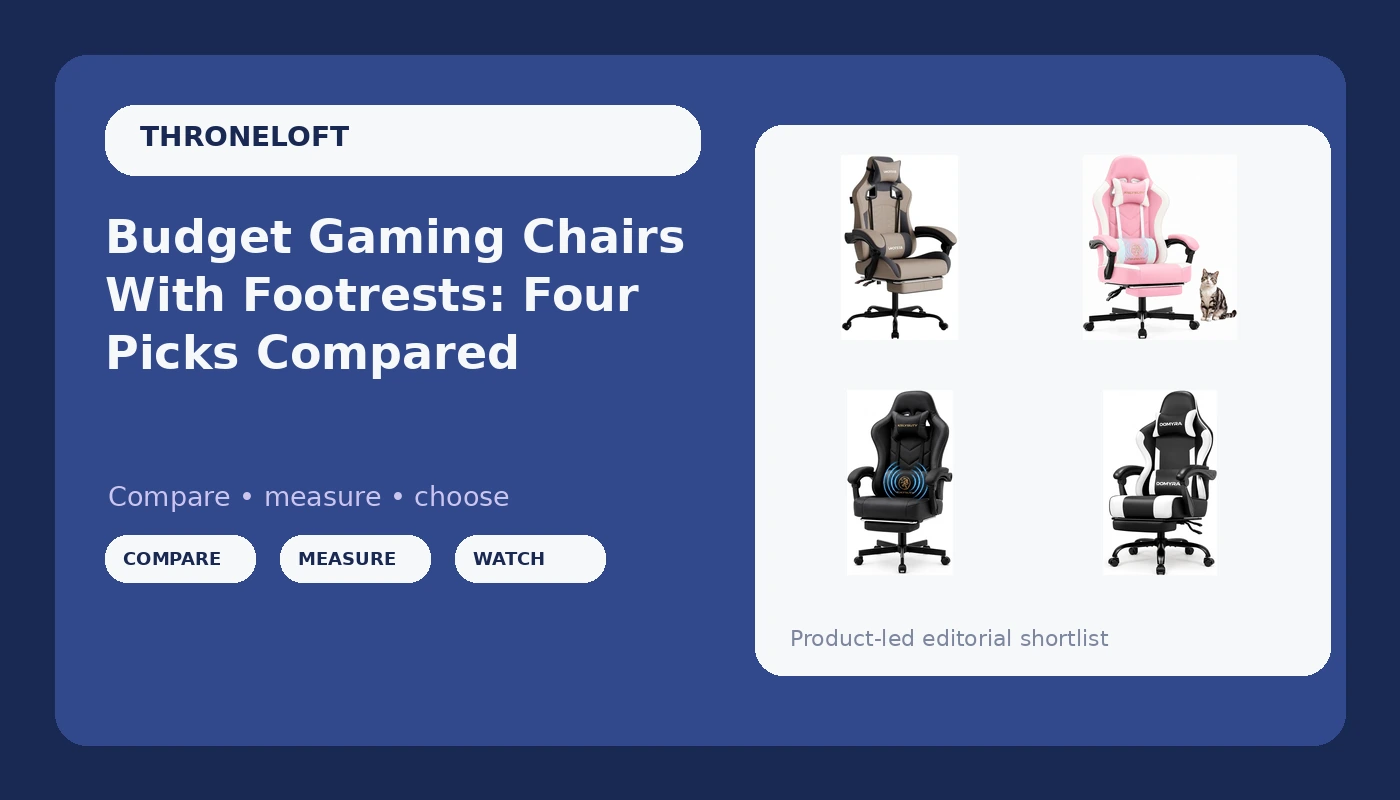
I have spent ten years sitting in gaming chairs for a living, first as a competitive FPS player and now as an esports coach, and one of those years ended with a physical therapist telling me at 24 that my lower back was heading somewhere I did not want to go. Since then every chair gets the same test: can it hold me up through an eight-hour scrim day without me shifting my weight every twenty minutes? These four budget gaming chairs with footrests keep showing up in the questions my players send me, and they are all chasing the same buyer, someone who wants the racing silhouette, a footrest, and a total that does not require a payment plan. The silhouette is also the problem, and the footrest is usually where the money went instead of the foam.
Here is the frame I use. A gaming chair is a chair first. Lumbar support you cannot adjust is a bump, not support. Tilt tension you cannot lock is a rocking chair with a logo on it. Armrests that only go up and down will have you reaching for a throw pillow inside a month. A seat that runs too long for your legs will put pressure behind your knees no matter how good the back looks. None of that is glamorous, and none of it shows up in a product photo.
If you only read one line: two of these four list a pocket spring cushion, and those two are where I would start, because the seat is the first thing to fail on a cheap chair. If you are a bigger player, the one that names a 300 pound rating and a headrest is the safest fit of the group.
The four chairs at a glance
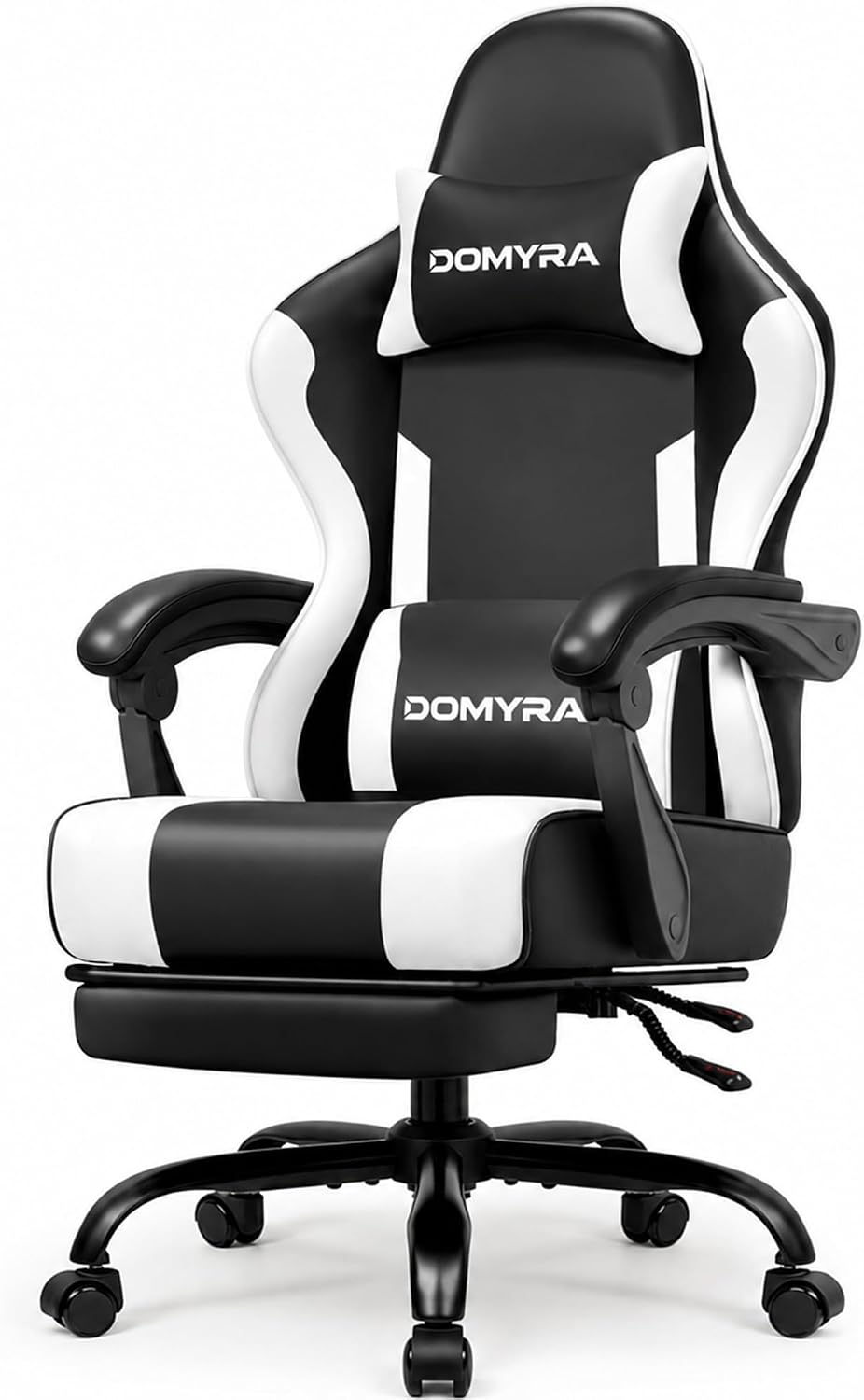
Gaming Chair Gamer Game Ergonomic with Footstool Lumbar Support Deep Black
The simplest build here: footstool and lumbar support, no electronics to buzz or quit
No headrest or weight rating named, and nothing in the listing describes the foam
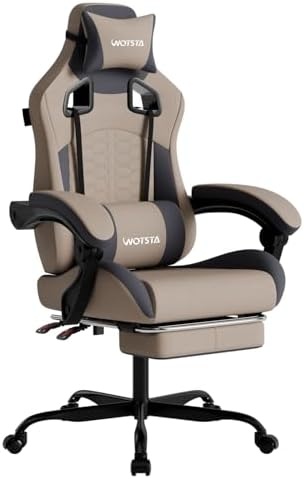
Gaming Chair with Massage, Ergonomic PC Gaming Chair with Footrest, Headrest and Lumbar Support, High Back, 300LBS (Grey)
The only one of the four that names both a headrest and a 300 pound weight rating
Massage is the headline feature and it lands in the lumbar zone, the last place I want a firm pad
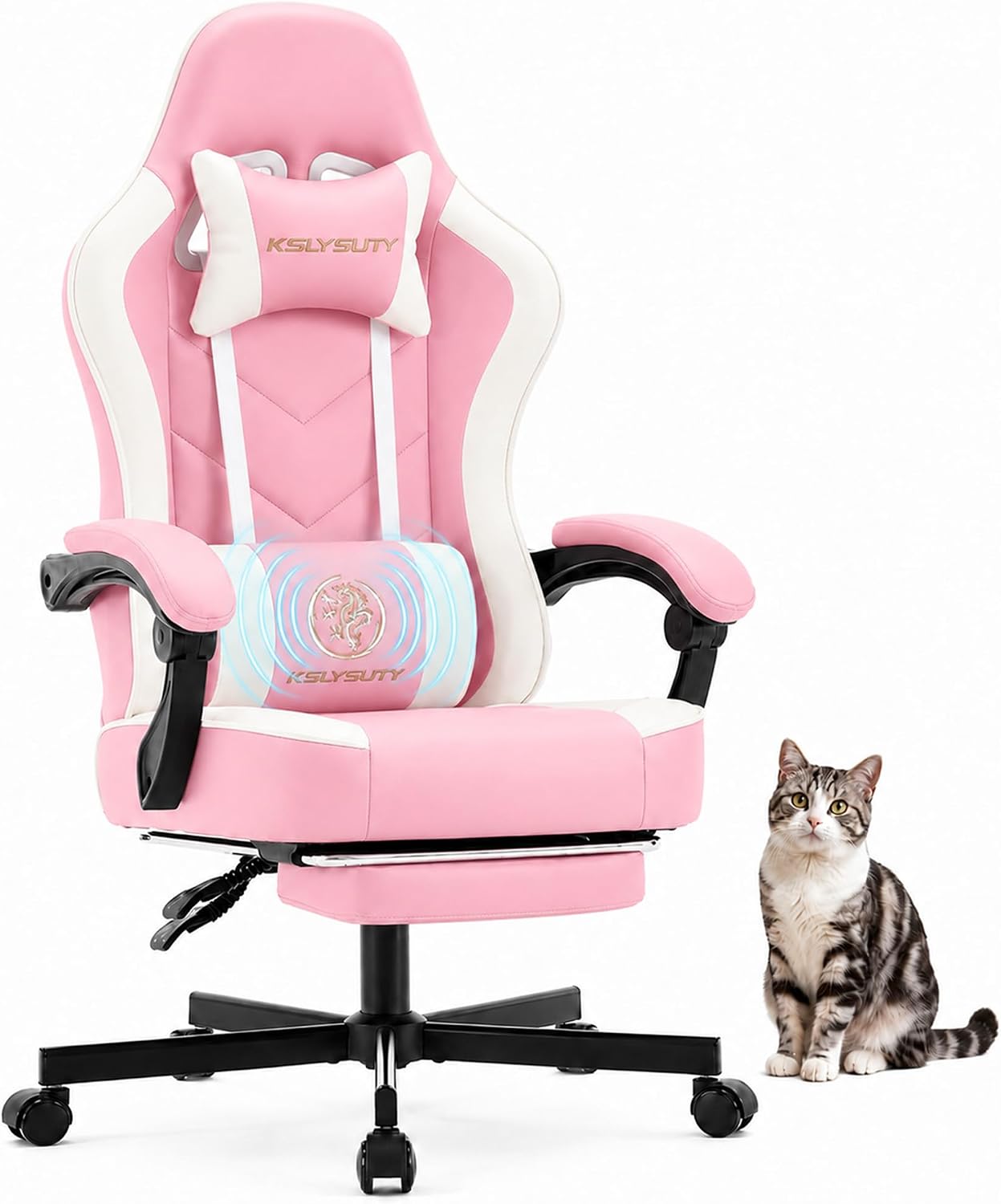
Mistpeople Gaming Chair, Ergonomic High Back Computer Chair with Footrest, Lumbar Support and Pocket Spring Cushion, Comfortable Swivel Home Office Desk Chair for Adults
Pocket spring cushion, lumbar support, and an adult fit focus in one listing
No weight rating and no headrest named, and the footrest adds bulk to a small room
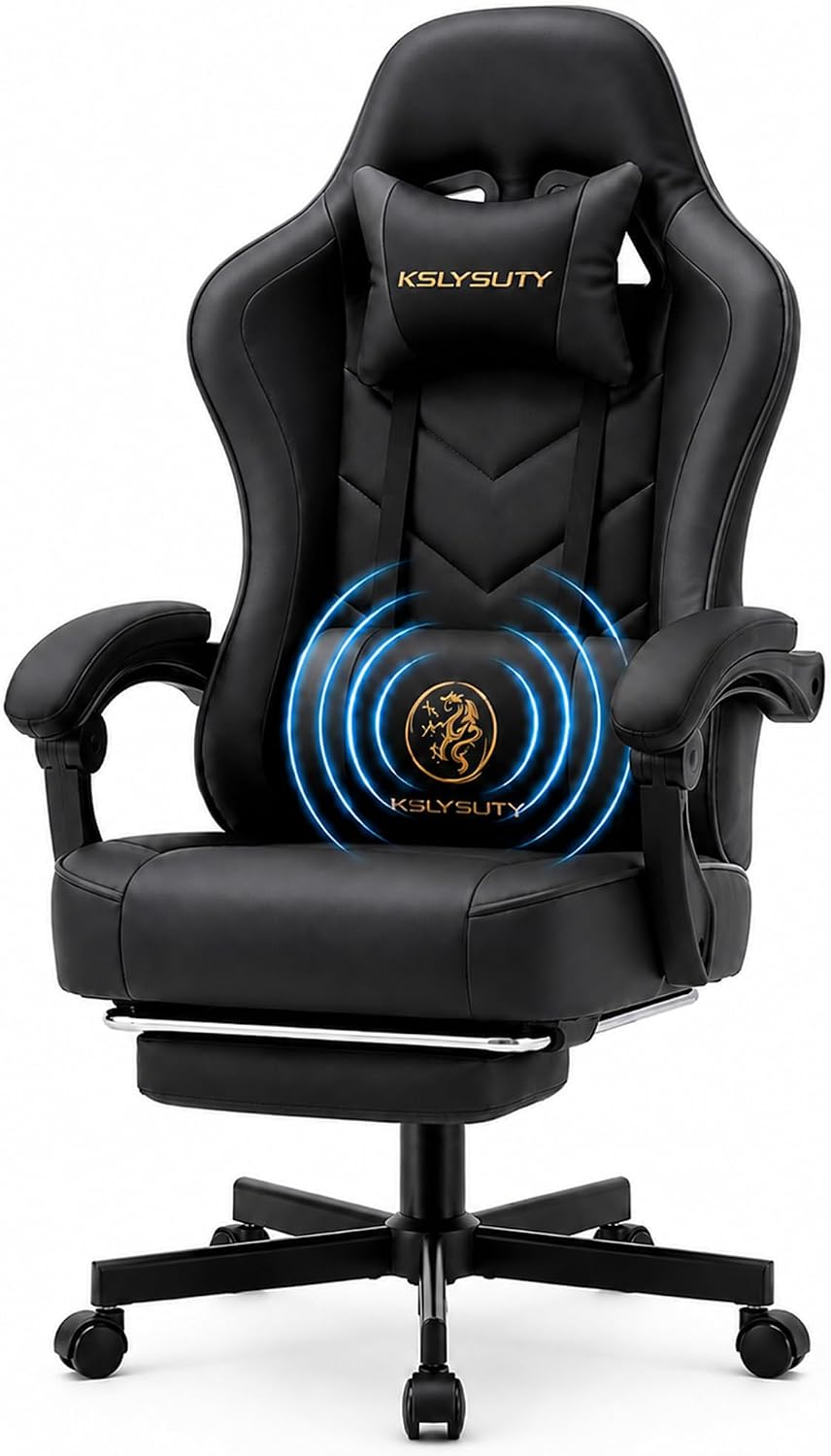
Office Desk Computer Gaming Chair for Adults, Ergonomic High Back Gamer Chair with Massage and Pocket Spring Cushion, Swivel Comfy Video Game Chairs with Footrest and Lumbar Support (Black)
Longest feature list of the group: pocket spring cushion, massage, footrest, lumbar support
At this tier a long feature list usually means the budget went into features rather than foam
Prices and availability were captured from Amazon Creators API and may change.
How I judge a budget gaming chair
Every chair that comes through my apartment gets the same checklist, and none of the four above gets a pass just because the price is low.
- Lumbar support. Is it adjustable up and down, or is it a fixed hump sewn into the backrest? A fixed hump fits exactly one body. If it is not your body, it becomes a pressure point by hour three. Adjustable is the whole game, and it is the first thing I look for in a listing.
- Tilt tension and lock. Can you set the recline and lock it? A chair that only rocks freely forces you to hold yourself upright with your own muscles, which is the opposite of what you bought it for.
- Armrest range. Up and down only is the minimum. If they slide forward and back and angle in, your elbows land where they should while you are on a mouse. If they do not, your shoulders take the load.
- Seat depth. This is the spec nobody lists. Too deep and the front edge digs into the back of your knees. Too shallow and your thighs hang off the front. You want roughly two fingers of gap behind your knee when your back is against the backrest.
- Foam versus mesh. Mesh breathes. Foam holds a shape. For long sessions in a warm room, mesh wins on comfort even when it looks less exciting.
The footrest is the feature that sells and the one nobody uses
All four of these chairs advertise a footrest or footstool, and I understand why it is in the listing. It photographs well. It signals comfort. It is the thing you point at when you are justifying the purchase to someone else.
In practice, a pull-out footrest matters in exactly two situations: you recline far back for controller games or VOD review, or you want to put your feet up while watching something. If you play upright at a desk with a keyboard and mouse, you will extend it twice in the first week and forget it exists. That is not a knock on these chairs. It is a warning about paying extra for the feature you will use least. If a footrest model and a non-footrest model are close in price and everything else is equal, take the footrest. If you are choosing between a footrest and better seat foam, take the foam.
Massage: two of these four lead with it
Two chairs here put massage in the product name, and this is where I slow down. A massage unit in a budget gaming chair is a motor in the lumbar area, and the lumbar area is precisely where your lower back needs a consistent, supportive curve. If the motor housing is firm and sits where your spine wants to curve inward, you have paid for a feature that fights the one job the chair has.
What to check before you buy either one: whether the massage is a light vibration or something more aggressive, where the unit physically sits relative to the lumbar curve, and whether the chair still feels supportive with the motor switched off, because it will be off most of the time. I cannot tell you how either implementation feels from a listing, and I would not pretend otherwise. Treat massage as a bonus, never as the reason.
Pocket spring cushion, and why it shows up twice
Two of the four list a pocket spring cushion, and it is the detail I care about most. Pocket springs are individually wrapped coils, the same idea as a decent mattress, and in a seat they let the foam compress around your sit bones instead of flattening into a slab under one spot.
The catch is that pocket springs range from genuinely good to a marketing word stapled onto a foam block. What separates them is what surrounds the coils. A coil system under thin foam will bottom out on the frame. A coil system under dense foam holds its shape for years. Since none of these listings publish foam density, the honest move is to read the customer photos and the long-term reviews on the product page, not the bullet points.
The fit check: height, weight, and seat depth
My rule is simple. No recommendation without a fit check. A chair that fits me at 5 foot 11 and 175 pounds can be miserable for a player at 6 foot 4, and the reverse is just as true.
The clearest data point in this group is the 300 pound rating on the grey massage chair, which is the only weight capacity named across all four listings. If you are a heavier player, that rating is not decoration, it is the number that tells you whether the gas lift, the base, and the frame were built with you in mind. Chairs that wobble after six months usually wobble because someone ignored that number.
For taller players, watch two things: whether the headrest, if there is one, actually reaches your neck rather than your shoulders, and whether the seat pan is deep enough that your thighs are supported without the front edge cutting into your knees. For shorter players, the opposite applies. A deep seat on a short frame is the fastest route to numb legs, and no amount of lumbar padding fixes it.
The four chairs, one at a time
Gaming Chair Gamer Game Ergonomic with Footstool Lumbar Support Deep Black
The plainest chair in this group, and I mean that as a compliment. The listing promises a short list: an ergonomic high back, a footstool, lumbar support, and a deep black finish. No massage motor, no pocket spring claim, no weight rating. For a player who wants a simple chair and does not want to think about electronics that can buzz or fail, that simplicity is a real feature.
The catch is that everything you cannot see, foam density, the recline mechanism, the armrest range, is unstated. You are buying on faith unless you open the details page and read carefully.
Gaming Chair with Massage, Ergonomic PC Gaming Chair with Footrest, Headrest and Lumbar Support, High Back, 300LBS (Grey)
This is the chair I would point a bigger player toward first, purely because it is the only one that names a headrest and a 300 pound capacity. A headrest that actually reaches your neck takes load off your upper traps during long sessions, and a stated weight rating tells you the manufacturer thought about the frame.
The massage function is the part I would test carefully. If the motor sits where your lumbar curve needs to be, it can turn a supportive chair into a chair with a lump in it. Grey is also the most forgiving color in a room with a window, which matters more than people admit.
Mistpeople Gaming Chair, Ergonomic High Back Computer Chair with Footrest, Lumbar Support and Pocket Spring Cushion
The Mistpeople chair is the one I would hand a player who spends more time at a desk than in a lobby. Pocket spring cushion, lumbar support, footrest, swivel base, and a listing written for adults rather than for kids who want a race car. If the cushion is built the way the name suggests, the seat will distribute your weight instead of concentrating it.
What it does not give you is a weight rating or a named headrest, so if either of those matters to you, this is the wrong pick of the four.
Office Desk Computer Gaming Chair for Adults, Ergonomic High Back Gamer Chair with Massage and Pocket Spring Cushion (Black)
The longest feature list in the group: massage, pocket spring cushion, footrest, lumbar support, swivel base, high back. On paper it does everything. That is exactly what makes me cautious. At a budget price, every feature is paid for out of the same pot, and the pot is small. When a chair lists massage, springs, and a footrest together, my first question is what got less attention, and the answer is usually the foam.
If you want the maximum number of boxes ticked in one purchase, this is your chair. If you want the seat to still feel good in year three, read the reviews before you commit.
What I would verify before you buy
- Weight capacity. Only one of the four publishes it. If yours does not, ask the seller or find it in the questions section.
- Armrest adjustment. Count the directions. Up and down alone is the floor, not the standard.
- Tilt lock. Confirm the chair locks at an angle rather than only rocking.
- Seat depth and your height. Sit at your desk with your back against a wall and measure from the wall to the back of your knee. That is your target seat depth.
- Return window. Budget chairs are the category where returns matter most, because the fit is the thing you cannot judge from a photo.
Bottom line
For most players, I would start with the Mistpeople chair, because a pocket spring cushion and adult-focused sizing are the two details that matter most over an eight-hour day. If you are a heavier or taller player, the grey massage model is the safer fit, since it is the only one naming a headrest and a 300 pound rating. The deep black chair is the pick if you want the fewest things that can break, and the black massage model is the pick if you want the longest feature list and accept the trade-off that comes with it.
Whichever you choose, spend the first week getting the setup right. Set the seat height so your feet are flat, lock the tilt where your hips sit slightly above your knees, and move the lumbar pad until it fills the curve of your lower back rather than poking it. A budget chair set up correctly will beat an expensive chair set up badly, and I have watched that play out in my own apartment more than once.