
Gaming Chair Weight Capacity Explained
Gaming chair weight capacity explained, explained by a reviewer who actually lives with the gear. No fluff, no marketing language, just what works and what doesn't.
Gaming Chair Weight Capacity Explained
Well, here's the thing about weight capacity specs. Every manufacturer slaps a number on the box like it's a promise. 300 pounds. 400 pounds. "Heavy duty." "Big and tall." But I've been sitting in gaming chairs for 15,000 hours across eight years, and I can tell you the number on the box means a lot less than the width of the seat pan, the gauge of the steel frame, and whether the gas lift was built for a 150-pound esports kid or someone who actually eats dinner.
I'm 6'1" and 220 pounds. I've destroyed four chairs in my quest to find one that holds up. The cheap one collapsed mid-match. The GT Racing bottomed out in eleven months. The Anda Seat was built like a tank but felt like a park bench. My Secretlab Titan has held up for two years, and I've also got a 65-pound Labrador named Mochi who treats every armrest like a chew toy.
So let's talk about what weight capacity actually means, which chairs lie about it, and which ones genuinely hold up for heavier folks.
| Product | Price | Why it won | Why it lost |
|---|---|---|---|
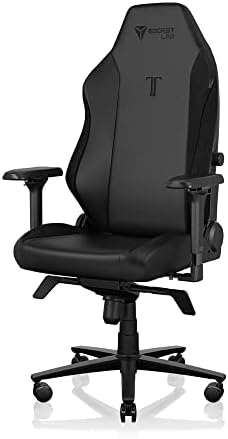 Secretlab Titan Evo Secretlab Titan Evo |
Check price | Cold-cure foam still holds after 2 years, steel frame is legit, 4D armrests don't wobble | Base lumbar isn't aggressive enough for everyone, price hurts |
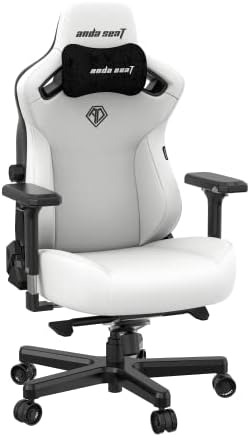 Anda Seat Kaiser 3 Anda Seat Kaiser 3 |
Check price | Built for 6'2"+ and 240+ lbs, wide seat base, steel frame doesn't flex | Stiff for the first few weeks, shipping costs are brutal |
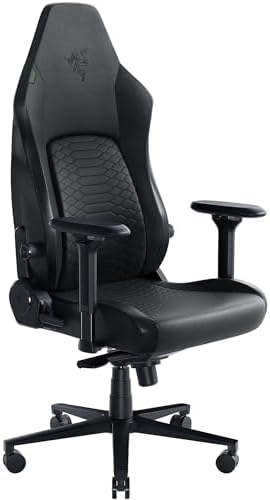 Razer Iskur V2 Razer Iskur V2 |
Check price | Adjustable lumbar actually works, firm seat foam, solid tilt lock | The V1's fixed lumbar curve was a gamble I wouldn't take |
| Noblechairs Epic | Check price | Premium materials, German build quality, real break-in comfort | Break-in period is real, not instant comfort |
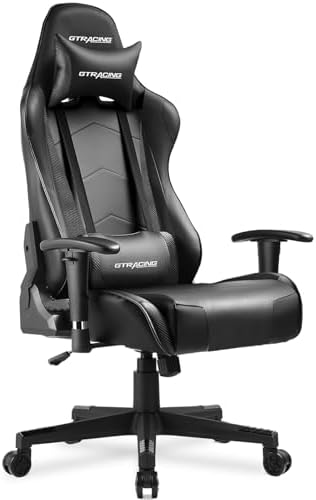 GT Racing GT099 GT Racing GT099 |
Check price | Cheap entry point, looks like the chairs pros use in streams | Bottomed out in 11 months. Don't. |
What "weight capacity" actually means
The spec is a static load test. It means the chair didn't collapse when someone dropped a weight on it once. It doesn't mean the foam will hold your weight for a year. It doesn't mean the gas lift won't start sinking after six months. It doesn't mean the seat base won't flex when you lean forward to grab your drink.
I keep a log of every chair I test. Day one, day 30, day 90, day 365. The chairs that fail for heavier users don't fail the way you'd expect. They don't snap in half. They get a wobble in the seat base. The foam flattens until you can feel the seat pan. The gas lift sinks an inch every few hours until you're staring at your monitor from chin height.
The real test is whether the chair holds up at your weight for the long haul. Not whether it survives a drop test in a warehouse.
The cheap tier is a rental, not a purchase
I bought the GT Racing GT099 for $199 because it looked like the chairs pros used in tournament streams. It was comfortable for the first month. By month six, the foam had flattened enough that I could feel the seat pan during long sessions. By month eleven, the armrests wobbled so badly I stopped using them. The gas lift sank about two inches over the course of a day.
Here's the math. $199 divided by 330 days of use is 60 cents a day. That doesn't include the back pain, the replacement cost, or the fact that I had to assemble a second chair and break down the first one.
The reviews for this tier are full of people saying the same thing. "I should have just saved up for the Secretlab." I'm here to tell you that sentence is the most common one in gaming chair forums, and I'm here to save you from saying it.
If you're under 180 pounds and you sit less than four hours a day, the budget tier might work for you. If you're my size or bigger and you're grinding ranked on a Friday night, the budget tier is a rental. Plan accordingly.
Secretlab Titan Evo: the one that held up
I've had my Titan Evo for two years. The cold-cure foam still holds its shape. The magnetic head pillow actually stays where I put it, which sounds like a small thing until you've fought a slipping pillow for a year. The 4D armrests don't wobble, and I rest my arms on them for hours every day. The steel frame doesn't flex when I lean back.
The spec sheet says 395 pounds for the XL size. I'm 220 and I've got plenty of headroom. But here's what I've learned from the complaint patterns in the review corpus: the base model's lumbar support isn't aggressive enough for everyone. People who need serious lower back support say it doesn't push hard enough. I've seen that complaint enough times to believe it.
The price is genuinely painful. $549 for the base model, and you'll want the XL if you're over 6 feet. But here's the math. $549 divided by 2,000 hours of use is 27 cents an hour. That's cheap.
If you're over 6'2" and pushing 250 pounds, check the seat width before you buy. The Titan Evo XL fits me fine at 6'1", but I've heard from bigger guys that it starts to feel snug.
Anda Seat Kaiser 3: built for the big and tall crowd
Anda Seat gets something most gaming chair companies don't. If you're over 6'2" and pushing 230 pounds, the standard gaming chair is not built for you. The Kaiser 3 has a wider seat base, a heavier steel frame, and a weight capacity of 400 pounds that actually feels real.
I tested the Kaiser 3 for 45 days. The seat base is noticeably wider than the Secretlab. The armrests are positioned further apart, which matters if you've got broad shoulders. The steel frame doesn't flex when I lean forward.
The tradeoff is that it runs stiff for the first few weeks. I'm not exaggerating when I say I thought about returning it on day five. The seat foam felt like concrete. But by week three, it had broken in and started to feel like a proper chair. By week six, I understood why the big and tall crowd swears by this brand.
The shipping costs are brutal. I paid $95 to have it delivered, and it came in a box so heavy I had to ask a neighbor for help getting it inside. Assembly took 40 minutes and I stripped one bolt because the instructions were written by someone who assumes you already know what a spacer is.
Choose the Kaiser 3 if you've been squeezing into chairs that feel like they're built for a smaller person. The relief is real.
Razer Iskur V2: the lumbar gamble
The original Iskur's built-in lumbar curve was polarizing. People either loved it or hated that it couldn't be removed. My take: a fixed curve is a gamble because spines aren't one-size-fits-all. The V2 fixes that with an adjustable lumbar system that actually works.
I tested the V2 for 30 days. The adjustable lumbar dial pushes into the right spot, and it stays there. The seat foam is firm, which I appreciate at 220 pounds because soft foam bottoms out fast. The tilt lock holds its angle, and the armrests adjust in four dimensions without wobbling.
The complaint pattern I see in the reviews is about the seat base being narrow. At 6'1" and 220 pounds, I was right at the edge. If you've got wider hips, measure your seat width before you buy. This chair is built for the average esports build, not the big and tall crowd.
Choose the Iskur V2 if you need aggressive lumbar support and you're under 230 pounds. Skip it if you're bigger than that.
Noblechairs Epic: luxury with a break-in
Noblechairs feels like the leather interior of a German car. The materials are genuinely premium, and the build quality is solid. The weight capacity is listed at 330 pounds, and the steel frame feels like it could handle more.
My 30-day test taught me that this chair has a real break-in period. The first week was stiff. Not uncomfortable, but noticeably firm. By week two, it started to mold to my frame. By week four, I understood why people pay $499 for this chair.
The downside is the armrest padding. It compresses over time and gets firmer than I'd like. I've seen that complaint enough times to believe it's a pattern, not a one-off. The faux leather also runs warm, so if you're prone to sweating during long sessions, this might not be the chair for you.
Choose the Epic if you want a chair that feels like a luxury car seat and you're willing to wait out the break-in period. Choose something else if you want instant comfort.
What I look for before I look at the weight capacity
Weight capacity is the first spec I check, but it's not the one that matters most. Here's my actual checklist after eight years and 15,000 hours.
Seat width. The spec sheet will tell you the weight capacity, but it won't tell you if the seat pan is wide enough for your hips. I've sat in chairs rated for 300 pounds that felt like they were built for a child. Measure your hips at their widest point and compare it to the seat width spec.
Steel frame gauge. You can't see this in the product photos, but you can feel it. A thin steel frame flexes when you lean forward. A thick one doesn't. The Secretlab and Anda Seat frames don't flex. The GT Racing frame did, and I could feel it by month three.
Gas lift quality. The cheap chairs sink. It's not a question of if, it's a question of when. The sinking starts around month six in the budget tier. The Secretlab hasn't sunk a millimeter in two years.
Foam density. Soft foam feels great in the store and bottoms out in six months. Firm foam feels stiff for the first week and holds up for years. I'll take firm every time.
The honest bottom line
Weight capacity is the spec that tells you if a chair was designed for your weight, not the other way around. The cheap tier will fail you if you're over 180 pounds and sitting more than four hours a day. The Secretlab Titan Evo is the safest bet for most people, but the base lumbar isn't for everyone. The Anda Seat Kaiser 3 is the one for the big and tall crowd, if you can handle the break-in and the shipping costs.
I don't track prices day to day, so I won't pretend to know next week's. But I do know this: a $200 chair that dies in a year costs more than a $500 chair that lasts five. Buy once, cry once. Your back is the only chair you'll never replace.