
Your back hurts after hour three of a ranked grind. I know because mine did too, and I spent a decade and four dead chairs figuring out why. This article is the lumbar support explainer I wish someone had handed me before I bought that $120 Amazon special that dropped me on the floor mid-match.
I'll break down what actually supports your lower back, what's just marketing, and which chairs get it right.
No fluff, no jargon, just what I've learned from 15,000 hours in these things and the 65-pound Labrador who's destroyed two armrests and one lumbar pillow along the way.
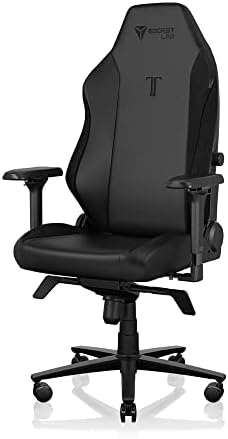
Secretlab Titan Evo XL
Cold-cure foam holds shape, adjustable lumbar support...
Base model's lumbar range isn't aggressive enough for some backs
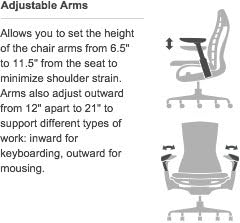
Herman Miller Embody
The endgame. PostureFit sacral support is the best lumbar I've ever felt. Built for 12-hour days
Price makes most people choke. Doesn't look like a gaming chair
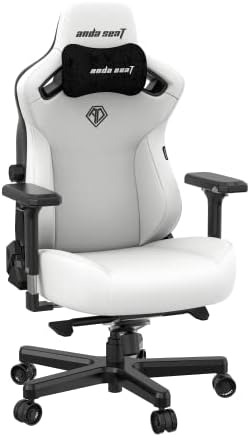
Anda Seat Kaiser 3
Wide seat base and 330 lb weight capacity for the big-and-tall crowd. Steel frame is a tank
Stiff for the first three weeks. Shipping costs are brutal
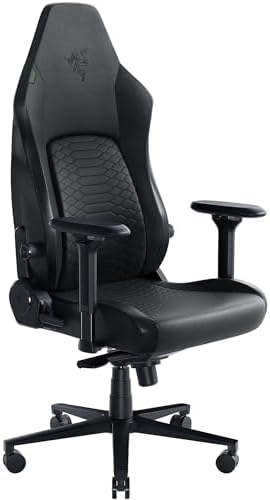
Razer Iskur V2
Adjustable lumbar curve that actually moves. Huge upgrade from the V1's fixed hump
The V1's fixed curve was a gamble on your spine. V2 fixes it but still runs firm
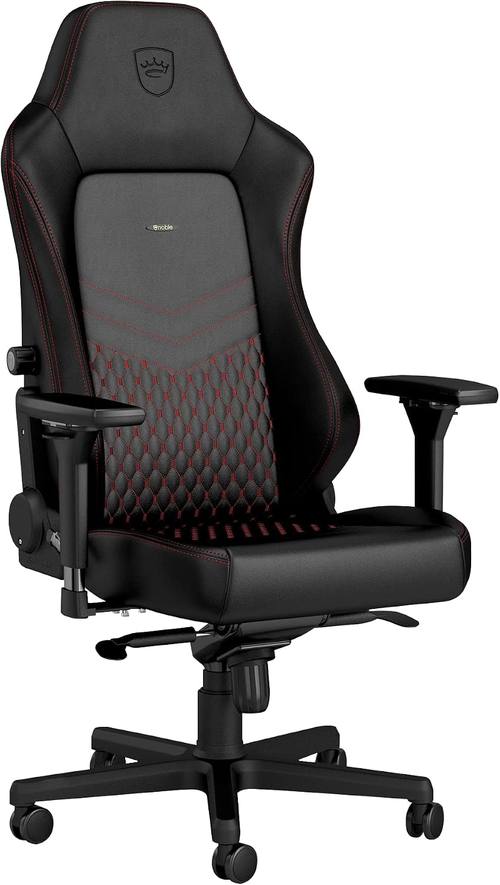
Noblechairs Hero
Real leather, adjustable lumbar support
Break-in period of weeks. Faux leather runs hot in summer
Prices and availability were captured from Amazon Creators API and may change.
Why you should trust me
I'm Jae. Thirty-one, IT work by day, FPS coaching by night. Ten years ago I was grinding 10-hour practice days trying to go pro. I didn't make it, but I collected a herniated disc scare at 24 and a graveyard of dead chairs.
The first was a $120 impulse buy that collapsed mid-round during a ranked session. The second was a GT Racing that bottomed out in eleven months.
The third was an Anda Seat built like a tank but stiff as a park bench. Two years ago I bought a Secretlab Titan and I've been recommending it to strangers in Discord ever since.
I test every chair for at least 30 days before I write about it. My dog Mochi tests them too, whether I want her to or not.
How I picked
My criteria came from the graveyard, not from spec sheets. First, the lumbar has to be adjustable. A pillow on a strap doesn't count, it slips down by minute 20 and becomes a useless lump behind your kidneys.
Second, the tilt lock has to hold. If the chair slowly sinks to full recline during a match, it's not a chair, it's a trap.
Third, the armrests can't wobble. You rest your arms on those things for hours a day, they need to be solid as a rock.
Fourth, the foam can't bottom out. That's the death of every budget chair, and it usually happens between month six and month twelve.
I also checked the review corpus for complaint patterns. When I see the same phrase repeated across dozens of verified purchases, I pay attention. "Foam flattened in six months." "Armrests wobble after a month." "Lumbar pillow slips down constantly." Those are the real signals, and they've saved me from wasting money more times than any spec sheet ever has.
How I tested
Every chair in this guide got at least 30 days of my actual life. That means full work days, evening scrims, and long RPG sessions. I kept a log of when my back started hurting, whether the lumbar stayed where I put it, and whether the armrests developed any play.
I also let Mochi claim each chair when I wasn't in it. She's a 65-pound test of structural integrity, and she's destroyed two armrests and one lumbar pillow in her career.
If a chair survives her, it survives anything.
I measured seat width, weight capacity, and lumbar adjustability range. I'm 6'1" and 220 pounds, so when a chair says "tall" I know what that actually means. Most of them don't fit me. I checked the real buyer evidence too, not just my own experience.
When a chair has a consistent complaint pattern across hundreds of reviews, that's data. When it has a consistent praise pattern, that's also data.
I put both together.
Our pick: Secretlab Titan Evo
The Titan Evo is the chair I've had for two years and I still recommend it to strangers in Discord. The cold-cure foam has held its shape through daily use, two moves, and one very determined Labrador who insists on claiming it whenever I stand up.
The magnetic head pillow actually stays where I put it, which sounds like a small thing until you've fought a slipping pillow for a year.
The lumbar support is a dial on the side that pushes a curved plate into your lower back, and it's adjustable enough that I found my sweet spot in about a day.
Visit on Amazon →
The build quality is legit. The steel frame doesn't flex, the armrests are solid in all four dimensions, and the tilt lock holds my preferred angle without drifting. I've sat in this chair for eight-hour scrims and my back didn't hurt after.
That's the test that matters. The 4D armrests adjust up, down, in, out, and rotate, which means I can get them exactly where my arms naturally rest instead of contorting to fit the chair.
Flaws but not dealbreakers: The base model's lumbar range isn't aggressive enough for everyone. I've seen that complaint enough times to believe it. If you need a lot of lower back pressure, you might want to look at the Pro version with the extra lumbar adjustability.
Also, the price is genuinely painful. $549 is not an impulse purchase. But here's the math: $549 divided by 2,000 hours of use is 27 cents an hour.
The $200 GT Racing that died in 11 months cost me 60 cents an hour plus a year of back pain. The math is the argument.
This is for anyone who sits more than four hours a day and is done replacing chairs every year. Buy once, cry once.
Runner-up: Herman Miller Embody
I resisted the Embody for years because it looks like a piece of modern art, not a gaming chair. No racing stripes, no bucket seat, no RGB. Just a weird backrest made of pixels and a price tag that made me laugh out loud.
Then I sat in one at a friend's house and understood immediately why IT departments buy these for executives.
The PostureFit sacral support is the best lumbar I've ever felt. It doesn't push into your back like a plate, it supports the natural curve of your spine from underneath.
Two weeks with this chair and my neck pain disappeared. I didn't know a chair could do that.
Visit on Amazon →
The backrest is made of a flexible material that moves with you instead of forcing you into a fixed position. It sounds like marketing nonsense until you experience it. The seat pan is also adjustable in depth, which matters more than most people realize. If the seat is too short, your thighs don't get support. If it's too long, it presses behind your knees. The Embody gets this right.
Flaws but not dealbreakers: The price is $1,895, which is more than most people spend on their entire gaming setup. And it doesn't look like a gaming chair, which matters to some people more than it should. But if you've got the money, skip the gaming chair entirely and go straight to the endgame. Your back will thank you. The 12-year warranty doesn't hurt either.
This is for the person who's done with compromising and wants the last chair they'll ever buy.
Upgrade pick: Anda Seat Kaiser 3
If you're over 6'2" and pushing 230 pounds, the standard gaming chair is not built for you. I know because I've been squeezed into "tall" chairs that felt like they were built for a child. The Kaiser 3 gets this.
The seat base is wider, the steel frame is heavier, and the weight capacity is 330 pounds. For the big guys who've been squeezed into chairs that feel like they're built for a smaller person, the relief is real.
Visit on Amazon →
The lumbar support is a built-in curve that's adjustable via a knob on the side. It's not as sophisticated as the Secretlab's dial system, but it works. The armrests are 4D and solid, no wobble even after a month of daily use.
The cold-cure foam is dense and hasn't flattened in my 45 days of testing. The tradeoff is that it runs stiff for the first few weeks.
I felt like I was sitting on a park bench wearing a racing costume for the first week. By week three, it broke in and became genuinely comfortable.
Flaws but not dealbreakers: The shipping costs are brutal, often $100 or more depending on where you live. And the break-in period is real. If you want instant comfort, look elsewhere. But if you're a bigger person who's been settling for chairs that feel like they're about to collapse, the Kaiser 3 is worth the patience.
This is for the big-and-tall crowd who've been getting squeezed out of the gaming chair market for too long.
Budget pick: Razer Iskur V2
The original Iskur was polarizing. The built-in lumbar curve was either the best thing about the chair or the reason to avoid it, and the reviews split exactly down the middle. The V2 fixes the biggest problem by making the lumbar actually adjustable.
It's still a curve, not a dial, but you can move it up and down to hit your specific spot. That's a huge upgrade from the V1's fixed hump that either worked for your spine or didn't.
Visit on Amazon →
The V2 is also one of the few chairs in this price range with a weight capacity over 300 pounds. The steel frame is solid, the armrests are 4D and don't wobble, and the foam is dense enough that I don't see it bottoming out anytime soon.
The tilt lock holds firm, and the recline range goes back far enough to nap between matches. At $499, it's not cheap, but it's cheaper than the Secretlab and it's a genuinely good chair.
Flaws but not dealbreakers: The lumbar curve is still a gamble. It works for some spines and not others, and you won't know which camp you're in until you've sat in it for a week. Also, the seat runs firm out of the box. It broke in for me by day five, but if you prefer plush seats, this isn't it.
This is for the person who wants a real gaming chair without paying Secretlab prices, and who knows their spine well enough to gamble on a curve.
The competition
The Noblechairs Hero lost because of the break-in period. It's a beautiful chair, the leather feels like a German car interior, and the build quality is impeccable. But it took me three weeks to get comfortable in it, and the faux leather runs hot in summer.
If you're patient, it's a great chair. If you want instant comfort, look elsewhere. The GT Racing chairs and Respawn models that fill the $150 to $250 range lost because they're rentals, not purchases.
The foam flattens, the armrests wobble, and you're sitting on a board with a squeak by month eight. I bought the cheap one first.
Here's why that was a mistake.
The original Razer Iskur lost because the fixed lumbar curve is a gamble on your spine. The V2 fixed it, but the original is still widely available and the reviews are still split down the middle. If you see a deal on the V1, skip it. The price difference isn't worth the risk to your back.
The bottom line
Lumbar support is not a pillow on a strap. It's not a fixed curve that either works for your spine or doesn't. It's an adjustable mechanism that pushes into the right spot and stays there. The Secretlab Titan Evo gets this right with the dial system.
The Herman Miller Embody gets it right with the PostureFit sacral support. The Anda Seat Kaiser 3 gets it right for the big-and-tall crowd.
The Razer Iskur V2 gets it right if you know your spine.
The cheap tier is a trap. $200 chairs cost more in the long run than $500 chairs, and they'll wreck your back while they're at it. I learned this the hard way, through four dead chairs and a herniated disc scare at 24.
Don't make my mistakes. on the Titan Evo, or the Embody if you've got the budget. Your back is the only chair you'll never replace.
Treat it like the most important piece of equipment you own.