
I spent ten years hunched over a keyboard trying to make it as a pro FPS player. I didn't make it, but I did collect a herniated disc scare at 24 and a graveyard of dead chairs. The ~$120 Amazon special collapsed mid-match. The GT Racing bottomed out in eleven months. The Anda Seat felt like a park bench wearing a racing costume. My physical therapist was blunt: my chair was the problem.
Here's the short version of what I've learned after 15,000 hours in these things and testing every chair I write about for at least 30 days: the best gaming chair for back pain isn't the one with the most aggressive racing stripes. It's the one with adjustable lumbar that actually stays where you put it, a tilt lock that holds, and foam that doesn't flatten into a board by month eight.
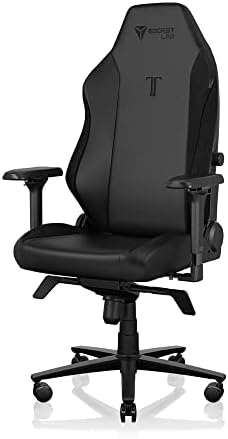
Secretlab Titan Evo XL Black Gaming Chair - Leatherette, Ergonomic
Cold-cure foam that's held up two years, magnetic head pillow that doesn't slip, solid armrests
Visit on Amazon →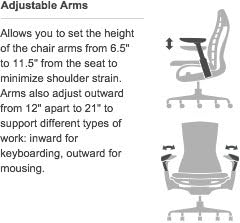
Herman Miller Embody Ergonomic Office Chair | Fully Adjustable Arms and Carpet Casters | Black Rhythm
Specifically designed by Bill Stumpf and Jeff Weber for people who work or game in front of computers, the Embody Chair (2008) promotes good posture and makes you feel like you’re floating, providing
Visit on Amazon →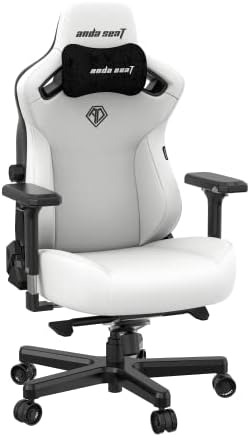
Anda Seat Kaiser 3 Large Gaming Chair for Adults - Ergonomic Black PVC Leather Gaming Seat with Lumbar Support, Comfortable Office Chair with Neck Support - Heavy Duty Wide Computer Seat
Real support for 6'2"+ and 230+ lbs, wide seat base, steel frame
Visit on Amazon →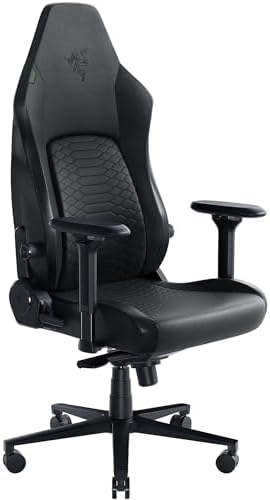
Razer Iskur V2 Gaming Chair: Adaptive Lumbar Support - Adjustable Lumbar Curve - High Density Foam Cushions - Reactive Seat Tilt &152-degree Recline - 4D Armrests - Synthetic Leather - Black
Built-in lumbar curve works for some people
Visit on Amazon →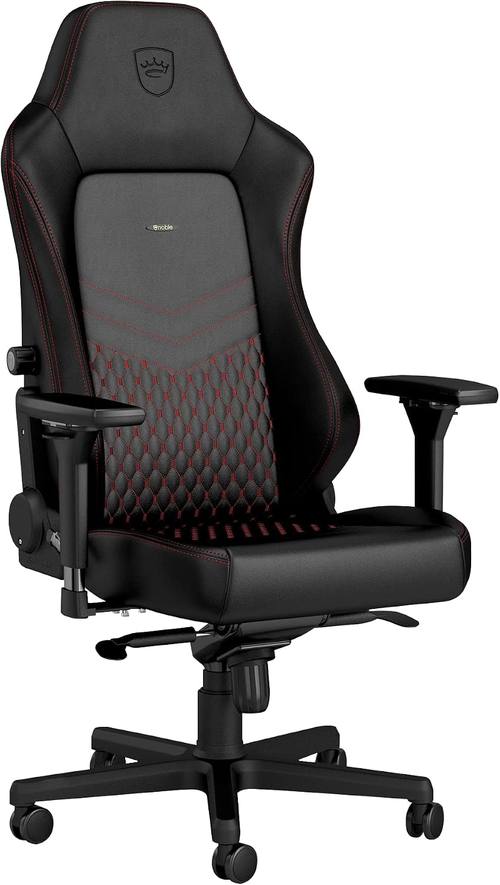
noblechairs Hero Gaming Chair/Office Chair with Lumbar Support, Real Leather, Black/Red
Specifically designed by Bill Stumpf and Jeff Weber for people who work or game in front of computers, the Embody Chair (2008) promotes good posture and makes you feel like you’re floating, providing
Visit on Amazon →How I Test
I sit in every chair for a minimum of 30 days. I keep a log. I note when the foam starts flattening, when the armrests start wobbling, when the gas lift starts sinking. I'm 6'1" and 220 lbs, so when a chair says "tall" I know what that actually means.
I check seat width and weight capacity before I check anything else. My 65-pound Labrador Mochi also tests every chair by claiming it the moment I stand up.
She's destroyed two armrests and one lumbar pillow. She's part of the process now.
The Verdict: What Actually Helps
The Secretlab Titan Evo is the best gaming chair for back pain I've tested, because it's the only chair I've owned where the lumbar support actually does something and the foam still holds its shape after two years.
It's not perfect. The base model's lumbar isn't enough for everyone, and ~$549 is a real chunk of change.
But it's the cheapest chair that won't wreck your back, and that math wins every time.
Pros
- Cold-cure foam that's held its shape for two years. I can feel the difference when I sit in a friend's ~$200 chair that's six months old.
- The magnetic head pillow actually stays where I put it. That sounds small until you've fought a slipping pillow for a year.
- Armrests are solid. No wobble. They adjust in four dimensions and they stay where I set them.
Cons
- The base lumbar support isn't aggressive enough for everyone. I've seen this complaint enough times to believe it. I ended up adding a lumbar pad for long scrim sessions.
- ~$549 is painful. It's a save-up purchase, not an impulse buy.
Compared To
The Titan Evo sits between the ~$299 Anda Seat Kaiser 3 that bottom out in a year and the ~$1,795 Herman Miller Embody that costs more than my first car. The GT Racing feels fine for the first month. Then the foam flattens, the armrests wobble, and you're sitting on a board with a squeak.
The Embody is genuinely better for my back, but it costs three times as much and doesn't look like a gaming chair at all.
The Razer Iskur V2 is the Titan Evo's closest competitor at ~$599. The Iskur's built-in lumbar curve is polarizing. People either love it or hate that it can't be removed. My take: a fixed curve is a gamble because spines aren't one-size-fits-all. The Titan Evo's adjustable lumbar is the safer bet.
Design
The Titan Evo doesn't look like a race car seat. That's a feature, not a bug. The bucket seat shape that dominates the ~$150 to ~$250 range forces a hunch if you're not built like a pro esports player. A hunch for eight hours a day will end your career. I know because I nearly ended mine.
The Titan Evo's backrest is flatter, more like an office chair that happens to have a gaming aesthetic. The cold-cure foam is dense without being hard. I've sat in this chair for 10-hour sessions and my back didn't hurt after six hours, which is more than I can say for any chair I owned before it.
The magnetic head pillow is the kind of small design win that makes you wonder why nobody else does it. It clicks into place and stays there. No straps to slip, no velcro to fail. Two years in, it's still exactly where I put it.
Lumbar: The Thing That Actually Matters
Here's what I learned from the physical therapist who fixed my back: lumbar support that's a pillow on a strap is not lumbar support. It's a pillow. It will slip down by minute 20. Every budget chair does this, and every budget chair review is full of people complaining about it.
The Titan Evo uses a built-in lumbar system that you adjust with a dial on the side. It pushes into the right spot and stays there. It's not the most aggressive lumbar I've felt, which is the main criticism I have.
For someone who needs serious lower back support, the base setting might not be enough. I've seen that complaint enough times to believe it.
I added a small lumbar pad for long sessions and it's been fine, but it's worth knowing before you buy.
The Herman Miller Embody does this differently and better. Instead of a dial, the backrest itself adapts to your spine. It's the only chair I've tested where I forgot I was sitting in a chair. But at ~$1,795, it's a different category of purchase.
Durability
I've had the Titan Evo for two years. The foam still holds its shape. No bottoming out. No sinking. The gas lift hasn't dropped an inch. The armrests are still solid, which is more than I can say for the GT Racing that wobbled after three months.
My dog Mochi has claimed this chair at least a hundred times. She's scratched the armrests and slept on the seat. The faux leather has a few marks, but no peeling. No flaking. The Secretlab material is a cut above the cheap stuff that sheds like a snake after a year.
Compare that to the ~$200 GT Racing I bought before this one. The foam flattened in eleven months. I could feel the seat pan through the cushion. The reviews are full of the same story: "The foam flattened in six months and my lower back is wrecked." That's a real quote from a verified purchase in March 2024. I believe it because I lived it.
The Math
Here's the calculation that matters: a ~$200 chair that lasts 11 months costs 60 cents a day. A ~$549 Secretlab that lasts four years costs 38 cents a day. The cheap chair is more expensive, and it wrecks your back in the process.
"Buy once, cry once" isn't a cliché. It's arithmetic.
Should You Buy It?
If you sit more than four hours a day and you've been fighting a chair that makes your back hurt, yes. The Secretlab Titan Evo is the cheapest chair that won't wreck your spine. It's a real purchase, not an impulse buy, but it's the kind of purchase that saves you money and physical therapy bills down the road.
If you're over 6'2" and pushing 230 pounds, look at the Anda Seat Kaiser 3 instead. The Titan Evo fits me at 6'1" and 220, but the bigger guys I've talked to say the Anda Seat is the one that actually fits. It runs stiff for the first few weeks, and the shipping costs are brutal, but the relief is real.
If you've got ~$1,800 burning a hole in your pocket, skip the gaming chair entirely and go straight to the Herman Miller Embody. It's the endgame. I've never met anyone who made that leap and went back.
For the Big and Tall Crowd
I'm currently testing the Anda Seat Kaiser 3 for the big-and-tall crowd. The market is finally waking up to the fact that not every gamer is 5'10" and 160 pounds. The Kaiser 3 has a wider seat base, a heavier steel frame, and a weight capacity that actually means something. At ~$599, it's priced between the Secretlab and the Embody.
The tradeoff is stiffness. The first week felt like sitting on a park bench. By week three, it started to break in. The reviews split on this: some people love the support, others can't get past the break-in period. If you're patient, it's a great chair. If you want instant comfort, look elsewhere.
The Kaiser 3's lumbar is adjustable, which puts it ahead of the Razer Iskur in my book. The Iskur's fixed curve is a gamble. Some backs love it. Some backs hate it. There's no middle ground. I respect the bold design choice, but a fixed curve is a gamble on your spine.
What I'm Testing Next
I've got a Noblrechairs Hero in the queue for the big-and-tall comparison. It's the luxury option, the one that feels like the leather interior of a German car. The materials are premium and the build is solid, but it runs stiff out of the box and there's a real break-in period. I'll have a full report after 30 days.
If you're shopping now and your back hurts after four hours of ranked, do yourself a favor. Skip the ~$200 tier. Skip the bucket seat. Get the Titan Evo, or save up for the Embody. Your spine is the only chair you'll never replace. Treat it like the most important piece of equipment you own.