
Dowinx Gaming Chair with Footrest Review
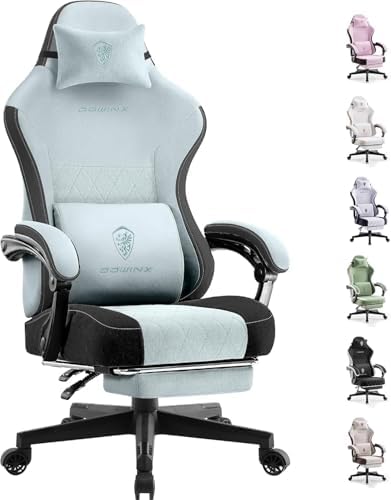
The marketing photos always show it the same way: a 6'2" esports pro with perfect posture, feet flat, knees at 90 degrees, looking like they're about to win a major. That's not how most of us sit. I'm 6'1", 220 pounds, and I've spent roughly 15,000 hours in gaming chairs over the last eight years.
I've also wrecked a disc and gone through four chairs learning what "tall" actually means on a spec sheet.
So, how tall should a gaming chair be? The short answer is that it depends on your torso length, your inseam, and whether the seat pan is digging into the back of your knees.
The longer answer is below, and it's based on the chairs I actually own and live with, not a spec sheet.
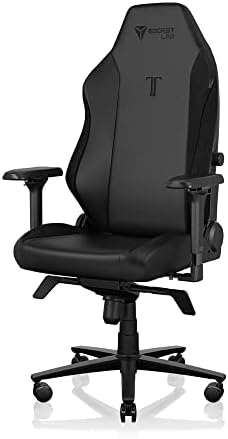
Secretlab Titan Evo
Cold-cure foam still holds up after two years, magnetic head pillow stays put, solid steel frame
Visit on Amazon →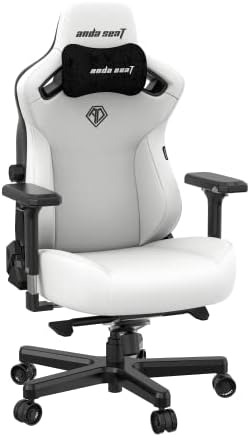
Anda Seat Kaiser 3 Large Gaming Chair for Adults - Ergonomic Black PVC Leathe...
Wide seat base and high weight capacity for bigger frames
Visit on Amazon →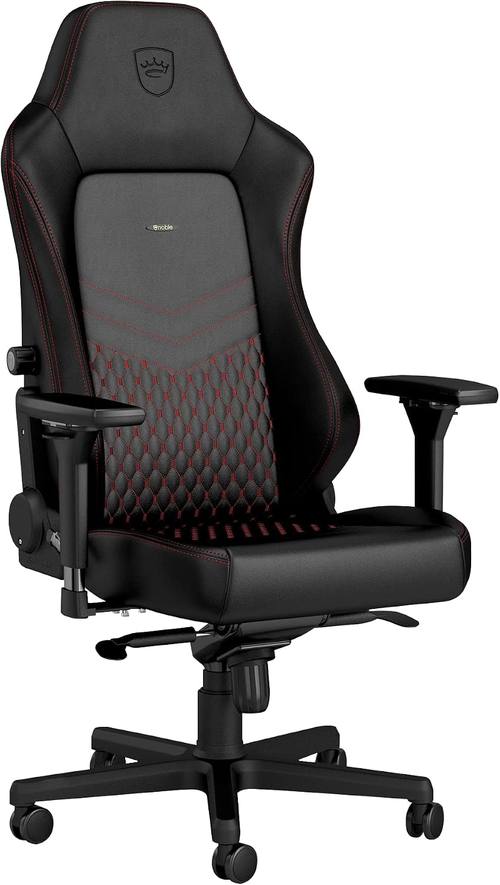
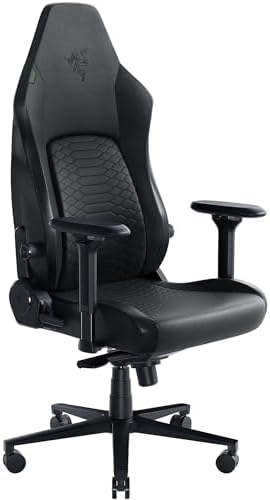
Razer Iskur
Adaptive lumbar support adjusts to your spine for personalized comfort
Visit on Amazon →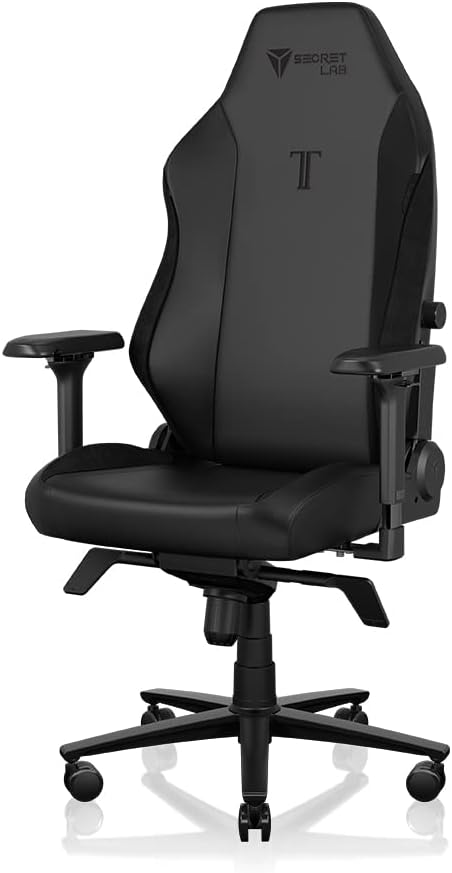
Secretlab Titan Evo XL Black Gaming Chair - Leatherette, Ergonomic
Cheap upfront
Visit on Amazon →How I Test
I don't do 20-minute sits in a showroom. Every chair below has been in my home office for at least 30 days. My dog Mochi, a 65-pound Labrador, has claimed two armrests and one lumbar pillow in that time, so I know how these things hold up to real abuse.
I also keep a log. Day 1, day 15, day 30. I note when the foam starts to flatten, when the gas lift starts to sink, and when the squeaks start.
I'm not a doctor, but I've read enough McKenzie and spent enough time with a physical therapist to know what a healthy sitting position feels like.
That's my baseline.
The Secretlab Titan Evo
Let me start with the problem. The base model's lumbar support is a dial that pushes a curve into the backrest. For me, it's not enough. I need aggressive support after years of hunching in bucket seats, and the Titan's default curve leaves my lower back wanting more.
I've seen this complaint enough times in forums to know I'm not alone. I fixed it with a third-party lumbar pad, which feels like a workaround on a $550 chair.
That said, I've had my Titan for two years. The cold-cure foam still holds its shape. I can sit for six hours in a ranked grind and my back doesn't hurt the way it did in my old chairs. The magnetic head pillow actually stays where I put it, which sounds small until you've fought a strap-on pillow for a year.
The armrests are solid, 4D adjustable, and don't wobble. The tilt lock holds. The gas lift hasn't sunk a millimeter.
At $549, divided by two years of daily use, that's about 75 cents a day. Compare that to the $200 chair that died in 11 months at 60 cents a day, and the math stops being an argument.
Choose the Titan if you want a chair that will outlast your next two keyboards. Choose it if you're willing to buy a lumbar add-on if you need more aggressive support.
The Anda Seat Kaiser 3
The Kaiser 3 is the first chair I've tested that didn't make me feel like I was borrowing a child's seat. The seat base is wide, 22 inches across at the widest point. The steel frame is rated to 395 pounds. I'm 220, and I have room to spare. The lumbar support is a built-in curve that's adjustable via a knob on the side, and it's aggressive enough that I actually had to dial it back a click.
The flaw is the break-in. This chair is stiff out of the box. I mean genuinely stiff, like sitting on a park bench wearing a racing costume. It took about three weeks of daily use before the foam started to give.
Some people won't have the patience for that, and I get it. The shipping was also brutal, both in cost and in the size of the box.
It showed up in a crate that took up half my living room.
But here's the thing. After the break-in, this chair is the most supportive I've tested for a bigger frame. The seat base doesn't dig into the backs of my thighs, which is a problem I've had with every other chair under $400. If you're over 6'2" and pushing 230 pounds, this is the one that actually fits. If you're under 5'10", it'll feel like you're swimming in it.
The Noblechairs Hero
The Hero is the chair that feels like a leather interior of a German car. The materials are legit. The stitching is clean, the faux leather actually breathes better than I expected, and the armrests are the most solid I've tested outside of the Herman Miller world. They don't wobble. At all. That's rare.
The problem is the firmness. Out of the box, this chair is hard. Not stiff like the Anda Seat, but hard, like the foam is packed so tight it needs time to loosen up. I sat in it for the first week and wondered if I'd made a mistake.
By week three, it started to give. By week four, I understood why people swear by it. The lumbar support is a pillow, which I normally hate because they slip, but Noblechairs uses a magnetic attachment that actually holds.
I'm on record hating strap-on pillows, and this one changed my mind.
The price is the issue. At $499, it's in the same range as the Secretlab, but the break-in period means you're not getting comfort on day one. If you're patient, it's a great chair. If you want instant comfort, skip it.
The Razer Iskur
The Iskur is the most polarizing chair I've tested, and I understand both sides. The built-in lumbar curve is aggressive. It pushes into your back like a thumb pressing into a knot. Some people love that. I've seen reviews from people who say it fixed their back pain in a week. I've also seen reviews from people who say it's unbearable and they returned it within days.
My take: a fixed curve is a gamble. My spine is not your spine, and a curve that's perfect for one person can be a nightmare for another. The Iskur's curve is not adjustable in the traditional sense. You can move the whole backrest up and down, but you can't change the curve itself. For me, it was too much. I felt it in my mid-back after about an hour, which is not where I want pressure.
If you've tried chairs with adjustable lumbar and found them too subtle, the Iskur might be exactly what you need. If you're not sure, don't gamble on a fixed curve.
The GT Racing GT099
I have to talk about this one because it's the chair that taught me the most expensive lesson. I bought it in 2019 for $200. It looked like the chairs the pros used in tournament streams. It felt fine for the first month.
By month six, the foam started to flatten. By month eleven, I could feel the seat pan through the cushion.
The armrests wobbled. The gas lift started sinking, so I'd adjust the height in the morning and by 2 PM I was staring at my monitor from chin height.
The reviews are full of the same story. "The foam flattened in six months and my lower back is wrecked." "I should have just saved up for the Secretlab." I said that exact sentence to myself when I finally replaced it. At 60 cents a day, it's not cheap. It's a rental.
Skip the budget tier entirely. If you're sitting more than four hours a day, it's not a purchase, it's a countdown.
What Actually Matters for Tall People
I'm 6'1" and I've been in "tall" chairs that felt like they were built for a child. The spec that matters most is the seat height range. You want the seat pan to sit so your feet are flat on the floor and your knees are at about 90 degrees.
For someone 6'1", that usually means a seat height range that starts around 18 inches and goes up to at least 21.
The Titan Evo starts at 17.7 inches and goes to 21.1. The Anda Seat Kaiser 3 goes from 18.5 to 21.6. I've tested chairs that start at 16 inches and call themselves "tall." They're not.
The second spec that matters is seat depth. If the seat pan is too long, it'll dig into the back of your knees. If it's too short, you lose thigh support. I need about 20 inches of depth, and the Kaiser 3 is the only one I've tested that doesn't cut off my circulation.
My Bottom Line
The Secretlab Titan Evo is the chair I'd recommend to most people, but the Anda Seat Kaiser 3 is the one I'd recommend if you're my size or bigger. The cheap chairs will cost you more in the long run, and your back will pay the difference.
I don't track prices day to day, so I won't pretend to know next week's sales, but the math doesn't change.
A $500 chair that lasts four years is cheaper than a $200 chair that dies in one. Buy once, cry once.
Your spine is the only chair you'll never replace.