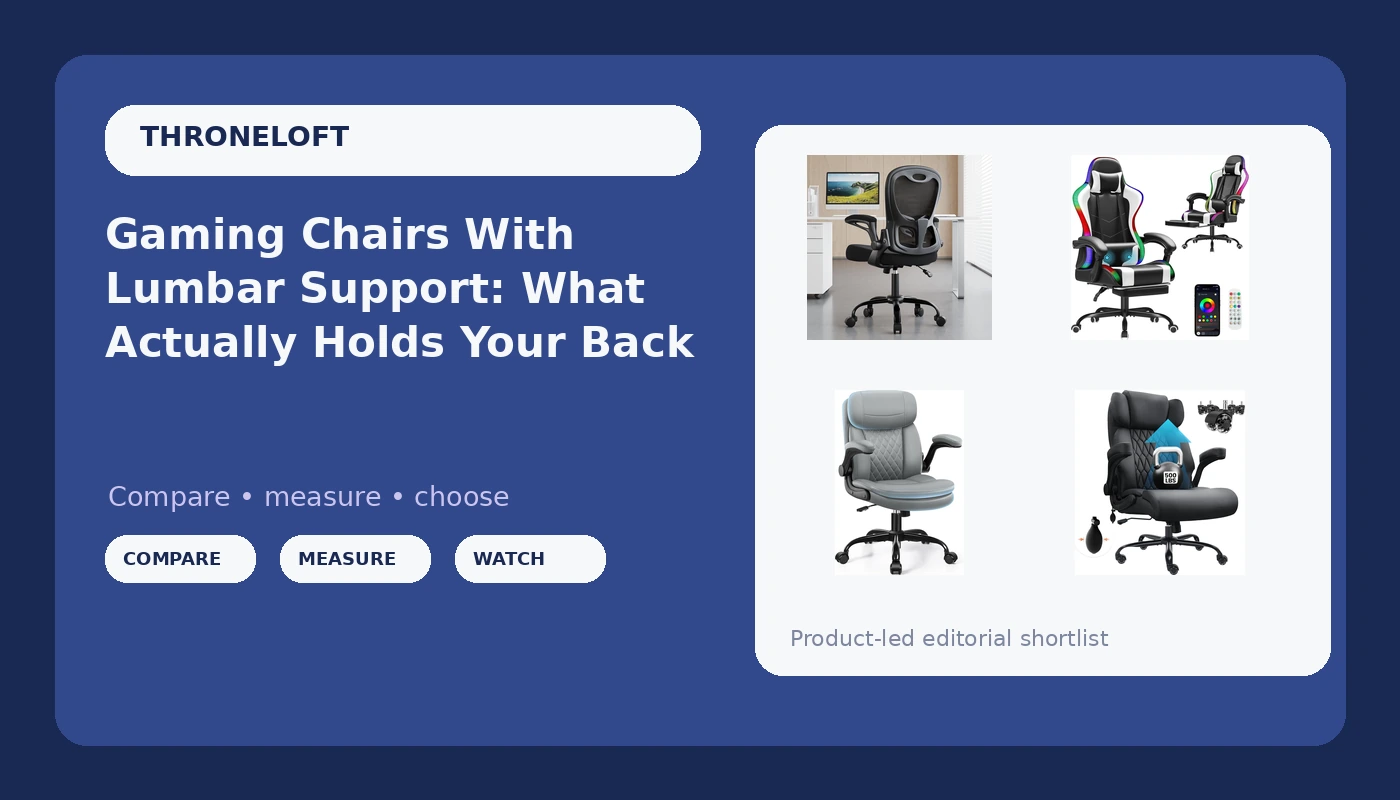
Related: Mesh vs Leather Gaming Chairs: Which One Survives an Eight-Hour Day
I have one rule about a gaming chair with lumbar support: if you cannot change the shape of it, it is decoration. I learned that at 24, when a chair I had been grinding ranked in for months sent me to a physical therapist with a disc scare and a long lecture about what a bucket seat does to a spine over ten-hour days. I coach full time now, and I have watched bad chairs end more practice schedules than wrist injuries.
Here is the thing about the four chairs on this page. Three of them are not racing-style gaming chairs at all. They are desk chairs that happen to work for gaming, which is a better category to shop in. The fourth is a racing chair with RGB and a massage motor, and I am going to be straight with you about what that motor does and does not do for your lower back.
Every pick below gets judged on the same four questions. Does the lumbar support adjust, and can you reach the adjustment while sitting in it? Does the tilt lock at an angle where your hips sit at or slightly above your knees? Do the armrests move enough to get under a desk and still hold your elbows? And would this chair still be comfortable at hour six, not hour one? The comparison table near the end puts all four side by side.
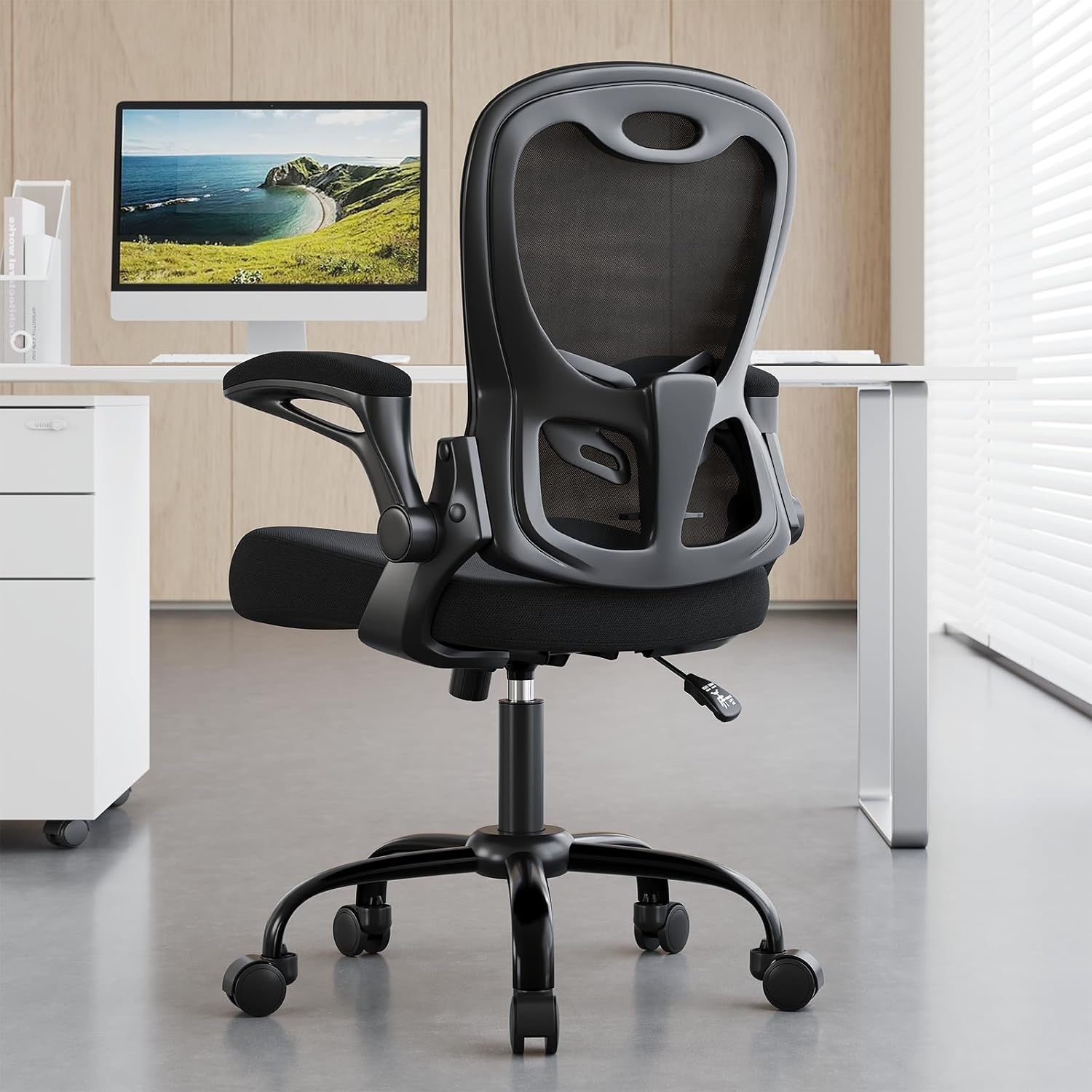
Best Overall: Office Chair 330 lbs Capacity, Ergonomic Mesh Desk Chair
This is the chair I would hand to most of my players first, and it is the least expensive of the four. A mesh back is the single biggest upgrade you can make for long sessions. It breathes, it flexes with your spine instead of holding one fixed shape against it, and it does not turn into a swamp in July. The listing rates it to 330 lbs, and that number is a structural rating for the whole assembly, not just the seat pan. The base, the gas cylinder, and the tilt mechanism all carry that load together, which is why I care more about the underside of a chair than about the stitching on top.
The high back gives you real shoulder contact, and the flip-up armrests are a genuinely useful feature rather than a gimmick. Flip them up and the chair slides all the way under a desk, which matters in a small room. They also get out of the way when you want to sit forward and actually work instead of recline.
The tradeoff is adjustability. The listing calls out lumbar support but does not spell out whether that support moves, so treat it as a fixed curve until you confirm otherwise. If your lower back needs pressure at one specific height, that detail matters more than anything else in this article. Check the return policy, and if the lumbar piece is fixed and it lands wrong on you, send it back.
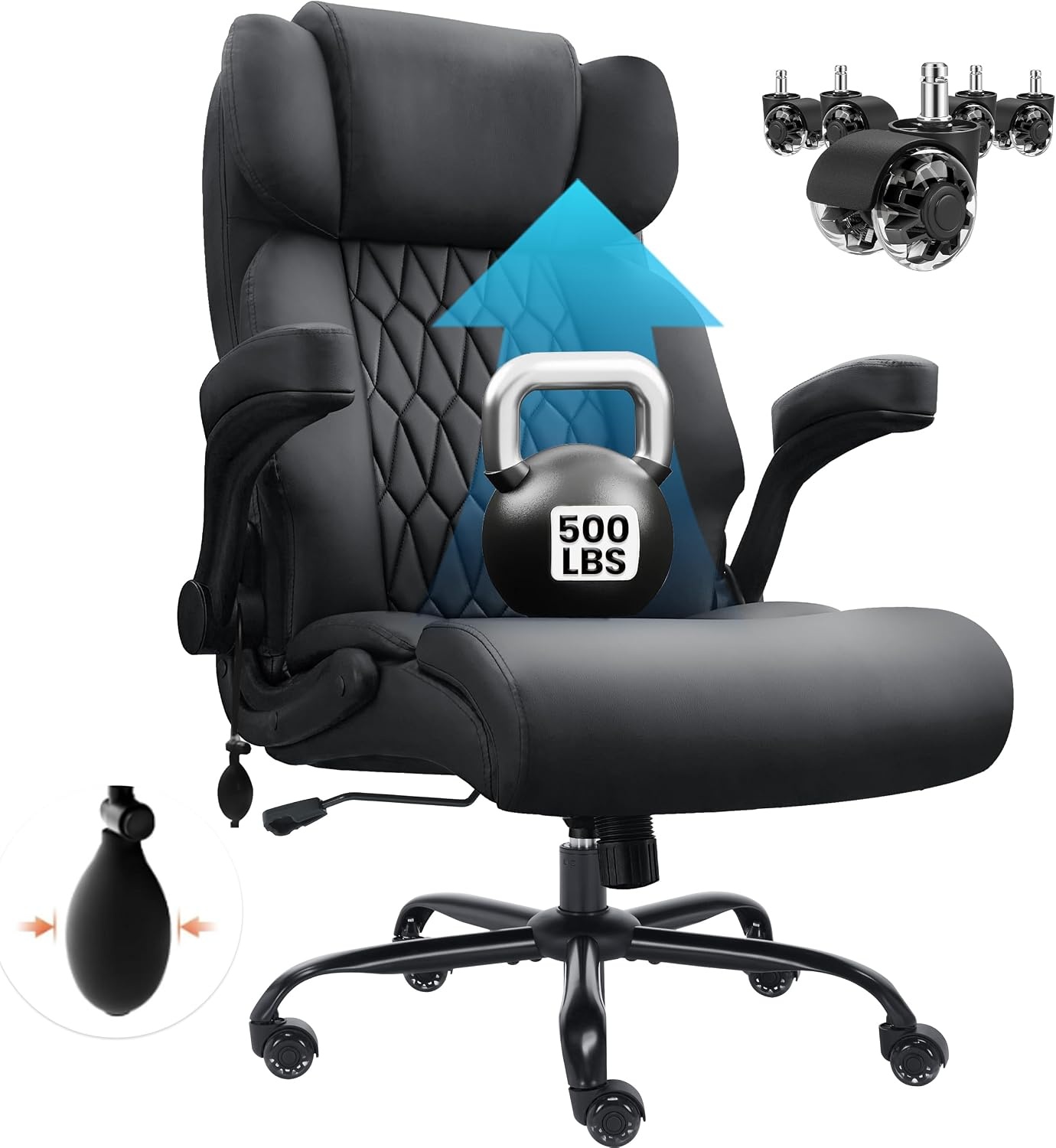
Best for Big and Tall: 500 lbs Big and Tall Office Chair
This is the chair I would point a 6'4" player at, and it is the only one here whose name promises adjustable lumbar support. Adjustable is the word that matters. A fixed bump pushes on whatever part of your back it happens to line up with. An adjustable pad lets you move the pressure to the part of your lumbar curve that actually needs holding, and you can change it on the days your back is tired versus the days it is not.
The extra wide seat solves a different problem. If a seat is too narrow, your hips get squeezed inward and your knees drift out of line, and no amount of lumbar support fixes that. The 500 lb rating, the heavy duty base, and the upgraded wheels are load-bearing parts of the design rather than marketing trim. Heavier chairs need bigger cylinders and wider bases or they start to wobble within a year, and wobble is the first sign a chair is on its way out. Thick armrest pads sound like a small thing until hour four, when your elbows start hunting for somewhere softer to land.
One caution, and it is the same caution I give every tall-and-wide chair: the seat is extra wide, and a wide seat can also be a long seat. If you are under about 5'6", check the depth before you buy. A seat that presses into the back of your knees pushes you forward all day, and you will blame the lumbar support for a problem that started in the seat pan.
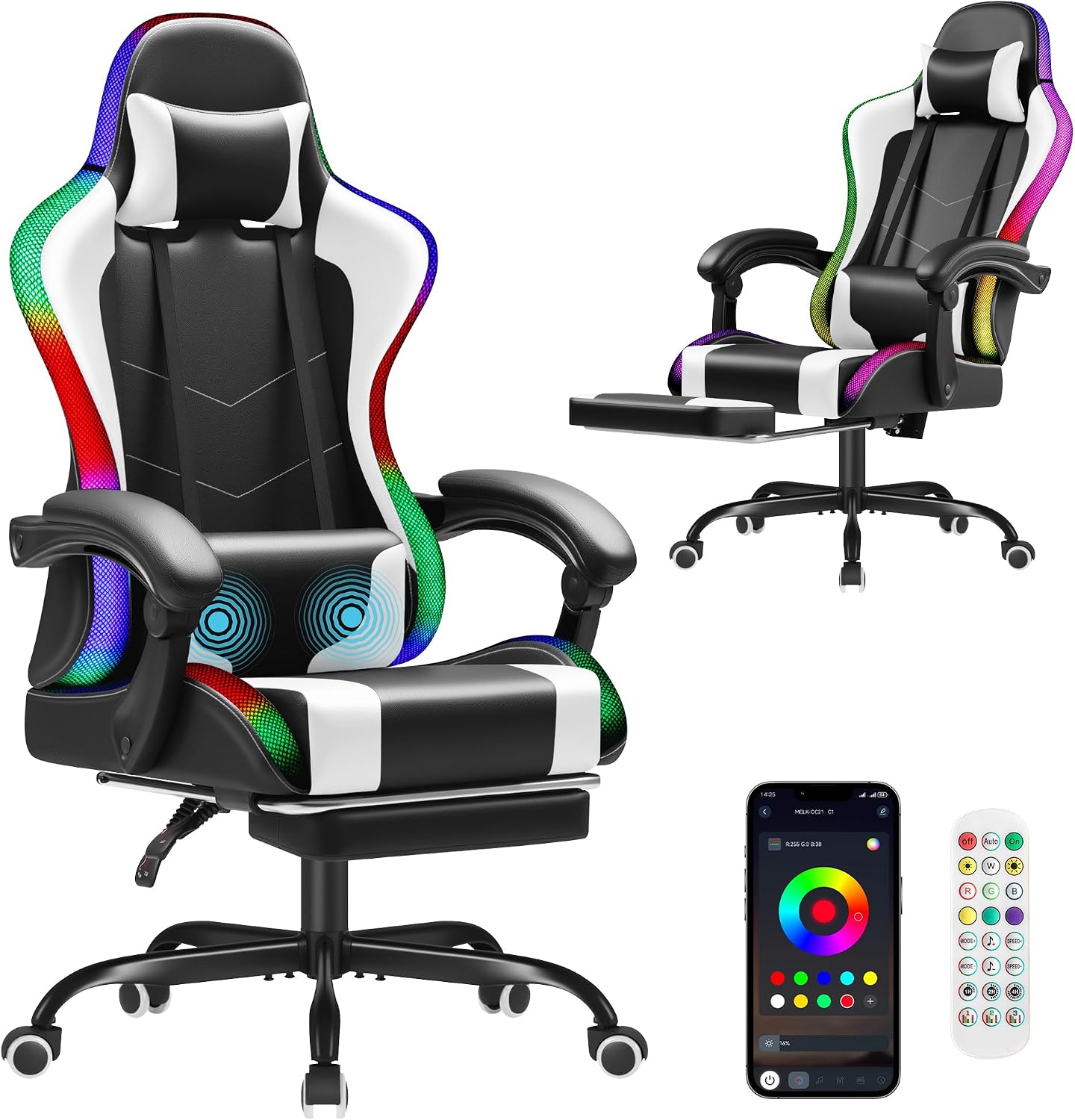
Best for the Look: Homall Gaming Chair with Massage Lumbar Support and RGB
Now the racing chair. I have spent a lot of words elsewhere telling people to skip bucket-seat designs, and I stand by that if posture is your only priority. But I also know what my players actually buy, and this is the one on the list that looks like a gaming chair. The RGB lighting and the massage lumbar support are the headline features, and for a lot of setups that look is the whole point.
Here is what the massage function is and is not. A massage lumbar is a vibration motor in the lumbar pad. Vibration can feel good after a long session and it can loosen you up between matches, but it is not the same thing as adjustable lumbar support. It does not change the shape of the curve behind your lower back, and it will not hold your spine in neutral when you start slouching at hour five. Buy it for the motor if you want the motor. Do not buy it thinking the motor is a posture fix, because it is not.
The RGB is the RGB. It is a lighting feature, it does not change how the chair supports you, and if you stream, you already know whether you want it. What I would confirm before buying is where the lumbar pad sits vertically and whether the tilt locks. Those are the two details that decide whether a chair survives a ranked grind on a Friday night or quietly becomes furniture.
Best for a Quiet Desk Setup: Office Desk Chair with Dual-Layer Support
Some people want a chair that does not announce itself. This is the quiet one, a desk chair built around what the listing calls a unique dual-layer support structure, priced between the mesh chair and the big and tall model. Dual-layer support in a backrest usually means a softer layer sitting over a firmer frame, and that is the right idea for long sessions. You want the surface to give a little while the structure behind it does the holding.
What the name does not tell you is whether the lumbar section adjusts, and that is the question I would answer before buying. Look for the adjustment mechanism in the product photos. If you cannot see one, assume it is fixed and plan around that.
Armrest adjustability matters here too. If the armrests only go up and down, you spend the day with your shoulders either shrugged toward your ears or hanging off the edge of the desk, and neither position is good for a six-hour scrim. Two directions of movement is the minimum. If a chair gives you height plus angle plus depth, that is the one that fits you instead of the one you fit yourself to.
How I check a chair before I recommend it
Four questions, every time. First, is the lumbar support adjustable, and can I reach the adjustment without standing up? Second, does the tilt lock, and does it lock at an angle where my hips are level with or slightly above my knees? Third, how many directions do the armrests move, because up-and-down only is not enough for most desk setups? Fourth, does the chair fit my height and weight rather than the other way around?
Then the boring structural checks. Weight capacity is a rating for the whole assembly, so a chair rated to 330 lbs and a chair rated to 500 lbs are built differently underneath even if they look similar from across the room. Mesh versus foam is a climate decision as much as a comfort decision, and anyone logging more than two hours a night should lean mesh. A base and cylinder that wobble after six months are the most common failure I see at this price level, and they are why I would rather have a boring heavy base than a fancy one that flexes.
Analysis: what these four chairs actually tell you
Sort these four by how much control you get over your own posture and the order is not the order of the prices.
The big and tall chair wins on adjustability, because adjustable lumbar support is named, and named adjustability is a spec you can verify before you spend anything. The mesh chair wins on breathability and desk clearance, with flip-up armrests that solve a real problem in a small room. The dual-layer chair wins on restraint, since it is the one you can leave in a room where you also take video calls. The Homall wins on the thing that never shows up in a posture checklist, which is that you will actually like sitting in it, and a chair you like is a chair you adjust instead of avoid.
None of these four is a $1,500 ergonomic task chair, and I am not going to pretend otherwise. What they are is four honest options at the entry and mid range. At this level, the difference between a chair that lasts and a chair that does not comes down to whether the support moves and whether the base holds.
The comparison table
The same four chairs, side by side. The adjustment details are the ones the listings name. Where a listing is silent, I have said so instead of guessing.
| Chair | Best for | Lumbar support | What to confirm before buying |
|---|---|---|---|
 Visit on Amazon → Office Chair 330 lbs Capacity Ergonomic Mesh Desk Chair |
Long sessions, hot rooms, small desks | Lumbar support, adjustment not specified | Whether the lumbar curve moves and what the cylinder is rated for |
 Visit on Amazon → 500 lbs Big and Tall Office Chair |
Tall and heavier players | Adjustable lumbar support | Seat depth, if you are shorter than about 5'6" |
 Visit on Amazon → Homall Gaming Chair with Massage Lumbar and RGB |
Anyone who wants the gaming look | Massage lumbar support (a vibration motor, not an adjustable curve) | Height of the lumbar pad and whether the tilt locks |
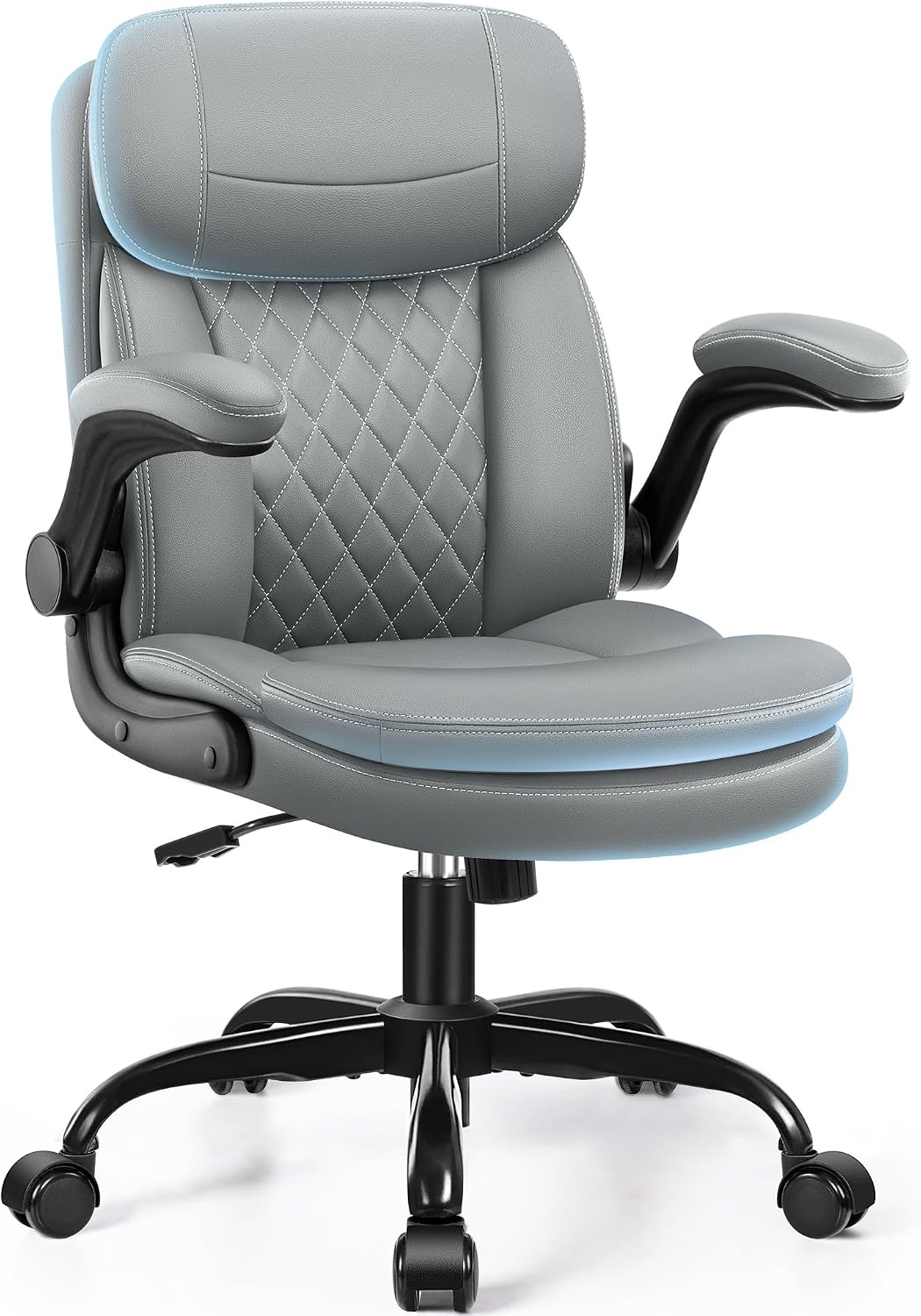 Visit on Amazon → Office Desk Chair with Dual-Layer Support |
A quiet desk setup that doubles as a gaming spot | Dual-layer support, adjustment not specified | Whether the backrest lumbar section adjusts and how the armrests move |
Should you buy the mesh office chair with the 330 lb rating?
Yes, and it is the one I would buy first. It is the cheapest path to a mesh back, a high back, flip-up armrests, and a 330 lb structural rating, and mesh is the material I would choose for anyone playing more than two hours a night. The only real question is the lumbar piece. If it is fixed and it lands on the wrong part of your back, return it and move up the list.
Should you buy the 500 lb big and tall office chair?
Yes, if you are tall or heavier, or if your lower back has opinions. It is the only chair here that names adjustable lumbar support, and it pairs that with an extra wide seat, a heavy duty base, and upgraded wheels. Check the seat depth if you are shorter than about 5'6", because extra wide usually means extra long too.
Should you buy the Homall gaming chair?
Buy it if you want the racing look, the RGB, and a massage motor in the lumbar pad, and you understand that the motor is a comfort feature rather than a support feature. Do not buy it expecting adjustable lumbar support, because vibration is not the same thing as a curve you can move. If posture is your only concern, spend the same money on the mesh chair instead.
Should you buy the dual-layer desk chair?
Yes, if you want a chair that looks like office furniture and not like a cockpit. Dual-layer support is a sensible design for long sessions, and the price sits in the middle of this group. Confirm two things first: whether the lumbar section adjusts, and how many directions the armrests move. If both answers are good, it is the sleeper pick on this page.
One last thing, and it is the rule I hold my players to. Whatever you buy, set the seat height so your feet are flat, lock the tilt at an angle that keeps your hips level or slightly above your knees, and put the lumbar pad where your back actually curves. A chair is a tool. If it does not support you at hour six, it is a toy, and you paid for it either way.